Orforglipron Tablets: Clinical Evidence, Formulation Quality & Wholesale Supply
Direct answer
Orforglipron is an oral, non-peptide GLP-1 receptor agonist with clinical evidence in weight management and type 2 diabetes. LeewayGo supplies finished tablets on a factory-direct basis. Compare the quoted strength, tablet count and finished-batch documentation, then confirm the minimum order and delivered wholesale price for your destination.
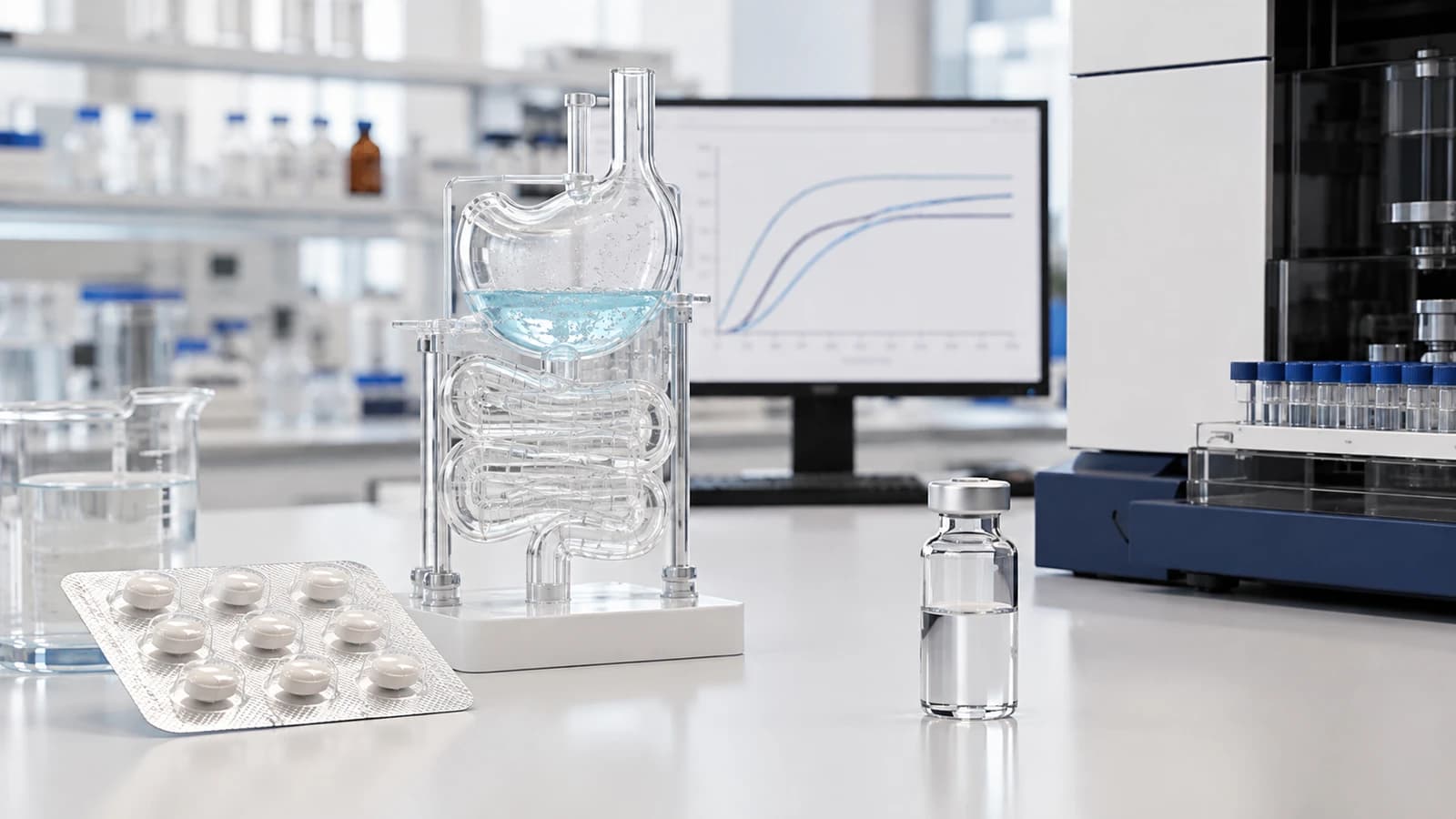
Laboratory illustration; not a photograph of the supplied product.
On this page
- 01Orforglipron: an oral GLP-1 built from a small molecule
- 02From LY3502970 to an approved tablet
- 03What the clinical trials actually measured
- 04Read the tablet specification before comparing prices
- 05Read tolerability alongside the efficacy results
- 06Food effects, release testing and storage
- 07Buying orforglipron tablets: where the quoted price can mislead
- 08Turn the first order into a repeatable purchase
1. Orforglipron: an oral GLP-1 built from a small molecule
Orforglipron is a non-peptide small molecule that activates the GLP-1 receptor. Developers pursued an oral product through a different chemical route from oral peptide formulations, which have to contend with digestive breakdown. For anyone comparing GLP-1 tablets, the active ingredient deserves a closer look than the broad label "weight-loss pill."
The early structural research on LY3502970, orforglipron's development code, described how it binds across the receptor's extracellular domain and upper transmembrane region. The researchers also found species-selective interactions. When you compare laboratory findings, the experimental model matters: different species need not respond to the molecule in the same way.[1]
That research gives orforglipron a molecular identity and an evidence base of its own. The next question is how that ingredient reaches the buyer as a finished tablet.
What changes when you buy tablets
A tablet quote includes a formulation, a declared strength and a pack configuration. Each affects what you are buying. The ingredient's identity test answers which molecule was measured; the finished-product specification describes the tablet offered for sale. A clinical paper, meanwhile, reports what happened with the formulation used in that study.
Keep those records together during a supplier comparison. Check the quoted strength and tablet count against the product specification, then identify which batch the accompanying test report covers. If the report describes the raw ingredient, ask for the finished-tablet information as well. This makes it easier to spot the gap before an order moves to dispatch.
LeewayGo supplies orforglipron finished tablets. The sections below connect the molecule's clinical evidence with the questions a buyer needs answered: what strength is offered, what the batch documents establish, and what a wholesale quotation includes. They also explain why tablet appearance or ingredient purity alone cannot establish equivalent clinical performance.
Use this guide to compare the evidence and prepare a supply inquiry. Personal treatment and switching decisions belong with a qualified healthcare professional.
2. From LY3502970 to an approved tablet
On April 1, 2026, the US FDA announced approval of Lilly's Foundayo, an orforglipron tablet product, for the specified adult weight-management population. The announcement and prescribing information are linked below. Their dates matter when you compare them with articles written during the earlier development programme.
You will also encounter the name LY3502970 in the literature. This was orforglipron's development code. The structural research examined receptor activation, while food-effect studies looked at how eating changed exposure to the oral product.[1][4] Later trials measured weight reduction, blood glucose control and maintenance after previous treatment. Reading these papers in sequence shows which question each stage of development answered.
Identify the product behind the evidence
A paper names a study formulation and a participant population. A supplier's quotation names the product offered to you. Keep both identities visible when assessing a tablet: the research explains the clinical interest in orforglipron, and the supplier's specification describes the item you can order.
Foundayo's approval applies to that named product. LeewayGo's tablet supply is a separate offer; it does not carry Lilly's authorisation or establish equivalence to Foundayo.
For a purchasing team, this is a straightforward filing task. Save the publication with its date and keep the quoted tablet's specification alongside it. A diabetes trial should remain identified as a diabetes trial when its results appear in a buying brief. Likewise, a strength used in a study should remain attached to that study's formulation.
If the proposed manufacturer, strength or packaging changes, reopen the product review before accepting the revised quotation. That gives the person placing the order an accurate description of the current offer, even if someone else did the initial research.
3. What the clinical trials actually measured
Orforglipron studies address several buying questions that often get bundled into one comparison. ATTAIN-1 examined weight reduction in adults with obesity without diabetes. ACHIEVE-3 compared oral therapies in people with type 2 diabetes. ATTAIN-MAINTAIN examined weight maintenance after previous treatment. Their results belong beside those descriptions.
Swipe to view all columns
| Study | Population and timeframe | Result reported here | Essential limitation |
|---|---|---|---|
| ATTAIN-1 [2] | 3,127 randomised adults with obesity without diabetes; 72 weeks | Mean weight change was −7.5%, −8.4% and −11.2% across the reported orforglipron groups, versus −2.1% with placebo | Treatment-regimen estimand; not an individual forecast |
| ACHIEVE-3 [3] | 1,698 adults with type 2 diabetes inadequately controlled with metformin; 52 weeks | HbA1c change was −1.91 percentage points with the reported 36 mg orforglipron regimen versus −1.47 with 14 mg oral semaglutide | Specific trial formulations, doses and diabetes population |
| ATTAIN-MAINTAIN [5] | Participants previously treated in SURMOUNT-5; two prior-treatment cohorts | Orforglipron preserved more of the preceding weight reduction than placebo at 52 weeks | No arm continuing the injectable treatment; one-year observation |
The HbA1c figures are changes in percentage points. Weight-change figures are percentages of starting body weight. Keep the units when you reuse a result.
Why two summaries of a trial can give different numbers
A trial's estimand defines the question its analysis is answering, including how it handles events such as treatment discontinuation. Different analyses can therefore produce different summaries from the same trial. Check the analysis behind a headline before comparing it with a number from the paper. Both sides of a comparison need the same basis.
The ATTAIN-1 values above follow its treatment-regimen estimand.[2] ACHIEVE-3 offers a direct comparison between two oral therapies in its enrolled diabetes population.[3] It provides more useful context than a comparison assembled from unrelated trials, but its findings still concern the specific formulations and regimens studied.
The maintenance result needs a separate reading. Participants had already received treatment in SURMOUNT-5. Retaining some of that earlier weight reduction is a different endpoint from starting a new weight-loss trial. With no arm continuing the injectable treatment, ATTAIN-MAINTAIN also cannot answer how switching compares with continuing that treatment.[5]
When a distributor sends you an efficacy slide, request the paper and locate the corresponding result. Check the population, observation period and comparison group before carrying the percentage into your own product discussion. The table summarises research; its trial doses are not LeewayGo tablet specifications or instructions for reproducing a regimen.
4. Read the tablet specification before comparing prices
For a finished-tablet order, start with milligrams per tablet and tablets per pack. Together, they describe far more of the purchase than a bottle price does. A written specification should identify the same item on the quotation, invoice and dispatch record.
Keep vial terminology out of this comparison. Bacteriostatic-water volumes, syringe units and lyophilised fill sizes belong to a different product form. For orforglipron tablets, ask the supplier to complete the fields below.
Swipe to view all columns
| Specification field | What the buyer should establish | What not to assume |
|---|---|---|
| Product identity and form | Orforglipron finished tablets, with the quoted product identifier | A raw-powder report describes the finished product |
| Labelled strength | The stated amount per tablet and how it is expressed | Trial milligrams and every marketed formulation are interchangeable |
| Pack configuration | Tablets per bottle, blister or box; order unit | Different pack prices refer to the same quantity |
| Batch linkage | Lot identifier connecting sample, report and shipment | A report from another lot covers this order |
| Available quality documents | Which tests concern the finished tablets, with methods and results | A generic certificate includes every required attribute |
| Handling and shelf life | Instructions supported for that product and packaging | All non-peptide tablets share one storage rule |
Tablet weight and active content answer different questions
A tablet contains formulation ingredients as well as the active substance. Weighing the whole tablet therefore does not measure its orforglipron content. Equally, a chromatographic purity percentage for the isolated ingredient is not the percentage of the finished tablet that should consist of orforglipron.
This distinction matters when a report accompanies a quotation. Read the sample description first: does it identify the ingredient or the finished tablets? Then check the method and result against the attribute being assessed. A clear report should let the buyer see which question has been answered and which information is still needed.
The FDA's Q6A guidance distinguishes drug-substance and drug-product specifications and addresses attributes relevant to solid oral products. Its framework is useful here, but the methods and acceptance criteria need to fit the actual product. The official source is linked below.
Send LeewayGo the strength and pack configuration you are considering, together with the documents your review requires. The team can confirm the available tablet options and current minimum order. That produces a quotation you can compare on the same basis as another supplier's offer.
5. Read tolerability alongside the efficacy results
ATTAIN-1 reported predominantly gastrointestinal adverse events. Across its orforglipron groups, 5.3% to 10.3% of participants discontinued treatment because of adverse events, compared with 2.7% in the placebo group.[2] Those figures deserve space beside the weight-change results when you assess the study.
What a tolerability percentage tells you
An event's severity, the number of people who experienced it and the number who stopped treatment are different measures. A description such as "mostly mild to moderate" does not tell you how many participants discontinued. Read the outcome definition before comparing percentages between reports.
Check who was enrolled as well. Findings from healthy volunteers, people with diabetes and another defined patient group describe different populations. The observation period also matters: a short exposure study and a longer clinical trial give different opportunities to observe events. Keep those details with the finding when you summarise it for colleagues.
The numbers above concern the study products and enrolled participants. They are useful for understanding the research, rather than predicting an adverse-event rate for a separately supplied tablet.
Persistent or severe symptoms need assessment by a healthcare professional. Treatment, dose changes and medicine combinations should follow qualified clinical advice and the applicable authorised product information.
The current Foundayo prescribing information includes contraindications, warnings and interaction information. Use that original document for product-specific clinical questions; the link appears in the official sources below. Oral administration does not turn a GLP-1 medicine into a casual wellness supplement.
For a clinic or distribution team, the supplier's role is to identify the offered product and explain which records are available. Clinical suitability is a separate professional decision. Keeping those responsibilities clear lets the supply discussion stay focused on specifications, documentation and the order itself without promising patient outcomes.
6. Food effects, release testing and storage
Food-effect research helps explain the interest in orforglipron as an oral product. In two phase 1 crossover studies, eating reduced measured exposure and peak concentration. The investigators judged those differences unlikely to produce clinically meaningful efficacy differences under the studied conditions.[4]
That is a more precise finding than saying food has no effect on absorption. A study can measure a pharmacokinetic difference and still conclude that its practical impact is limited. Keep both parts of the result when comparing orforglipron with oral peptide formulations that have different administration restrictions.
Connect release testing to the supplied tablet
The tablet you buy has a particular composition, manufacturing history and packaging. Its release testing should identify that product and the method used. The FDA's dissolution guidance explains how such testing, including comparisons of dissolution profiles in appropriate circumstances, contributes to product evaluation.
A dissolution result alone does not establish clinical interchangeability. For a supplier comparison, read the product description and method alongside the result. If the proposed formulation changes, ask which supporting information covers the new version. A similar-looking tablet or familiar product name cannot answer that question.
The same attention is useful when packaging changes. A different pack count affects the commercial comparison; a different formulation raises technical questions too. Resolve those changes before dispatch so the next order reflects what your team actually reviewed.
Get the handling instructions with the quotation
Request the labelled storage conditions, packaging requirements and shelf-life information for the quoted product. Agree how a shipping deviation will be recorded and reviewed. Neither refrigeration nor unrestricted exposure to heat and humidity should be assumed from the words "oral tablet."
Keep those instructions with the previous order's specification. The person handling a repeat purchase can then see whether the new offer changes the product, its pack or its handling requirements, instead of relying on a recollection of the first shipment.
7. Buying orforglipron tablets: where the quoted price can mislead
If you are comparing orforglipron suppliers, start with the line item on the quote. It needs to identify the tablet strength and the number of tablets you will receive. A bottle price leaves too much room for different products to look comparable.
The same problem appears in delivery terms. One supplier may include delivery to your destination; another may leave freight and import handling outside the quoted amount. A missing charge can make the second offer look cheaper until you calculate the cost of receiving the order.
LeewayGo offers factory-direct supply and Tier-1 wholesale pricing with zero middleman markup. Buyers can discuss a small initial purchase or commercial volume directly with the team. For orforglipron, the quotation is for finished tablets, with the available strength, packaging and minimum quantity confirmed for that product.
Put the offers on the same basis
Match the specification first. Then compare the price and the work included in it. If a supplier quotes a different strength, pack count or document package, record the difference before calculating a saving.
Swipe to view all columns
| Quote element | Put this in the comparison | Why it matters |
|---|---|---|
| Finished-tablet SKU | Same declared strength and product specification | Different items cannot be compared by bottle price alone |
| Quantity | Tablets per pack multiplied by packs ordered | Makes the pricing denominator explicit |
| Documentation | Included reports and any separately priced requests | Prevents assuming a test package is included |
| Packaging and dispatch | Pack format, preparation and stated lead time | Defines what the buyer receives and when |
| Destination delivery | Agreed DDP scope and any exclusions | Distinguishes merchandise price from delivered order cost |
For a matched specification, divide the agreed delivered order total by the number of tablets. Keep separately priced testing or other services visible. You then have a cost per tablet you can use in a purchasing budget. It is a commercial comparison, not a calculation of treatment cost or equivalent doses across different products.
Batch documentation deserves the same attention as price. A general ingredient report and a report covering the finished tablets answer different questions. Establish which records are included and what an additional request would cost. Otherwise, a quotation that looked complete may leave you arranging work after you have already committed to the order.
Use the first order to settle the details of the next one
For an initial purchase, ask which tablet specifications and sample arrangements are available. Confirm the quantity and the documents you will receive together. A ten-vial MOQ from a peptide offer does not describe a tablet order.
If you are planning wholesale purchases, provide the expected volume and packaging needs at the outset. Keep the agreed specification with the quotation so a later reorder can refer to the same item. Ask what has changed when a new batch or pack configuration is offered. This is particularly useful when one person evaluates the first order and someone else handles replenishment.
LeewayGo's supply proposition includes verified high-purity sourcing, low-MOQ testing opportunities and door-to-door DDP coordination. For your shipment, agree the destination, included charges and delivery responsibilities in writing. DDP does not confer product authorisation; the relevant market requirements remain a separate question. That distinction belongs in the order discussion for buyers in the US, Europe, Australia and Latin America.
To request an orforglipron quote, send the tablet strength you need, approximate quantity and destination, along with any required batch documents. Ask the team to confirm the current minimum order, the applicable wholesale tier and the delivered total. You will have a named product and a usable price to compare before deciding on the first order.
8. Turn the first order into a repeatable purchase
Save the quotation, agreed specification and available batch records together with the shipment details. Those records give the next buyer or warehouse colleague something more useful than a product name and a remembered price. They can identify what was ordered and compare it with the next offer.
Read each quality result for the question it answers
Identity establishes whether the substance is the stated molecule. Assay measures the amount under a specified method. Uniformity examines variation between individual dosage units, while dissolution measures release under defined test conditions. A result for one attribute does not answer the other questions. The linked Q6A and dissolution documents explain the technical framework.
Ask which of these attributes the supplied records address. This is a document-review checklist, not a statement that a particular LeewayGo batch has already passed every test. Match each available report to its sample and batch before using it in an acceptance decision.
For the first order, work through the transaction in sequence:
- Confirm the product name, tablet form, declared strength, pack count and order identifier against the quotation.
- Match the accompanying records to the finished batch. Keep ingredient reports or records from other samples clearly identified.
- Settle missing-document questions, additional testing requests and delivery conditions before dispatch.
- On receipt, record packaging condition and lot details, then retain the records for the next comparison.
If something does not match, request a written resolution linked to that order. Leave the agreed specification intact while the discrepancy is explained. A previous batch's report remains a record of that batch, rather than an unlimited guarantee for future shipments.
When you reorder, reference the earlier specification and confirm the current batch and delivery details. For a new inquiry, send LeewayGo the strength, approximate tablet quantity, destination and document requirements. The team can use that information to confirm the available supply options and applicable quotation.
Official documents & related reading
Regulatory and dosage-form sources supporting the discussion above. Approval of a named product does not establish approval or equivalence of LeewayGo tablets.
- FDA: Foundayo approval announcement (opens in a new tab)
- FDA: Foundayo prescribing information (July 2026) (opens in a new tab)
- FDA / ICH Q6A: specifications and acceptance criteria (opens in a new tab)
- FDA: dissolution testing of immediate-release oral dosage forms (opens in a new tab)
Continue your sourcing review
Choose the right sourcing path
Factory-direct finished-tablet supply. Confirm current specifications, batch documents and destination-specific delivery terms with our team.
Resellers / Individuals
Orforglipron Tablet Trial Inquiry
Request available tablet strengths, packaging and the current minimum order for your first evaluation.
Ask About Tablet Trial QuantitiesClinics / Bulk Buyers
Factory-Direct Tablet Wholesale
Discuss volume pricing, finished-tablet batch documentation and DDP delivery scope for your destination.
Request Commercial QuoteFrequently asked questions
Is orforglipron a peptide or a small molecule?
Orforglipron is a non-peptide small-molecule GLP-1 receptor agonist. It has its own molecular structure, formulation history and clinical evidence. It is not an oral version of tirzepatide or a lyophilised injectable peptide.
What form of orforglipron does LeewayGo supply?
LeewayGo supplies finished orforglipron tablets. Send the strength, tablet quantity, packaging preferences and destination you need. The team will confirm which specifications are currently available and quote the relevant order quantity.
Does high HPLC purity prove finished-tablet quality?
HPLC purity is one part of the review. Finished-tablet quality also involves the amount of active ingredient per tablet, consistency between units, dissolution performance and supported shelf life. Request the tablet specification and batch-linked test records, and check whether each report describes the finished tablets or the raw ingredient.
How do I request a trial quantity, wholesale price or DDP delivery quote?
Send your required tablet strength, quantity, destination country and documentation needs. Ask for the current minimum order, the applicable wholesale tier and the delivered total. Have the DDP scope and any exclusions written into the quote; delivery terms remain separate from product authorisation in the destination market.
Do clinical trials establish equivalence for every orforglipron tablet?
Clinical results apply to the formulations and populations studied. Approval of a named product applies to that product. A separately supplied tablet needs its own formulation, manufacturing and regulatory documentation, plus bioequivalence evidence where applicable. Use the paper to understand the research and the product records to evaluate the tablet being offered.
Clinical & technical references
View 5 cited sources
- 1.
Structural basis for GLP-1 receptor activation by LY3502970, an orally active nonpeptide agonist. Proceedings of the National Academy of Sciences, 2020. PubMed
- 2.
Orforglipron, an Oral Small-Molecule GLP-1 Receptor Agonist for Obesity Treatment. New England Journal of Medicine, 2025. PubMed
- 3.
Efficacy and safety of once-daily oral orforglipron compared with oral semaglutide in adults with type 2 diabetes (ACHIEVE-3): a multinational, multicentre, non-inferiority, open-label, randomised, phase 3 trial. The Lancet, 2026. PubMed
- 4.
Effect of Food Consumption on the Pharmacokinetics, Safety, and Tolerability of Once-Daily Orally Administered Orforglipron (LY3502970), a Non-peptide GLP-1 Receptor Agonist. Diabetes Therapy, 2024. PubMed
- 5.
Orforglipron for maintenance of body weight reduction: the double-blind, randomized phase 3b ATTAIN-MAINTAIN trial. Nature Medicine, 2026. PubMed