Tirzepatide Science & Sourcing Hub: Molecular Overview & Bulk Procurement
Direct answer
Tirzepatide is a 39-amino acid dual GIP/GLP-1 receptor agonist with a molecular weight of 4813.45 g/mol. Bulk procurement requires verifying ≥99% HPLC purity, confirming acetate salt conversion, and utilizing DDP customs clearance. Factory-direct sourcing bypasses broker markups, securing sterile lyophilized vials at $12–$18 per unit.
On this page
- 01Molecular Architecture & Biological Pathway
- 02Historical Evolution & Synthetic Horizons
- 03Landmark Clinical / Lab Studies & Evidence Ledger
- 04Compounding, Vial Sizing, Dilution Kinetics & Reconstitution Math
- 05Clinical Safety, Side Effect Triage & Failure Modes
- 06Aesthetic Application Optimization & Compatibility Matrix
- 07Commercial Supply Chain Economics: Factory-Direct vs Broker Markup
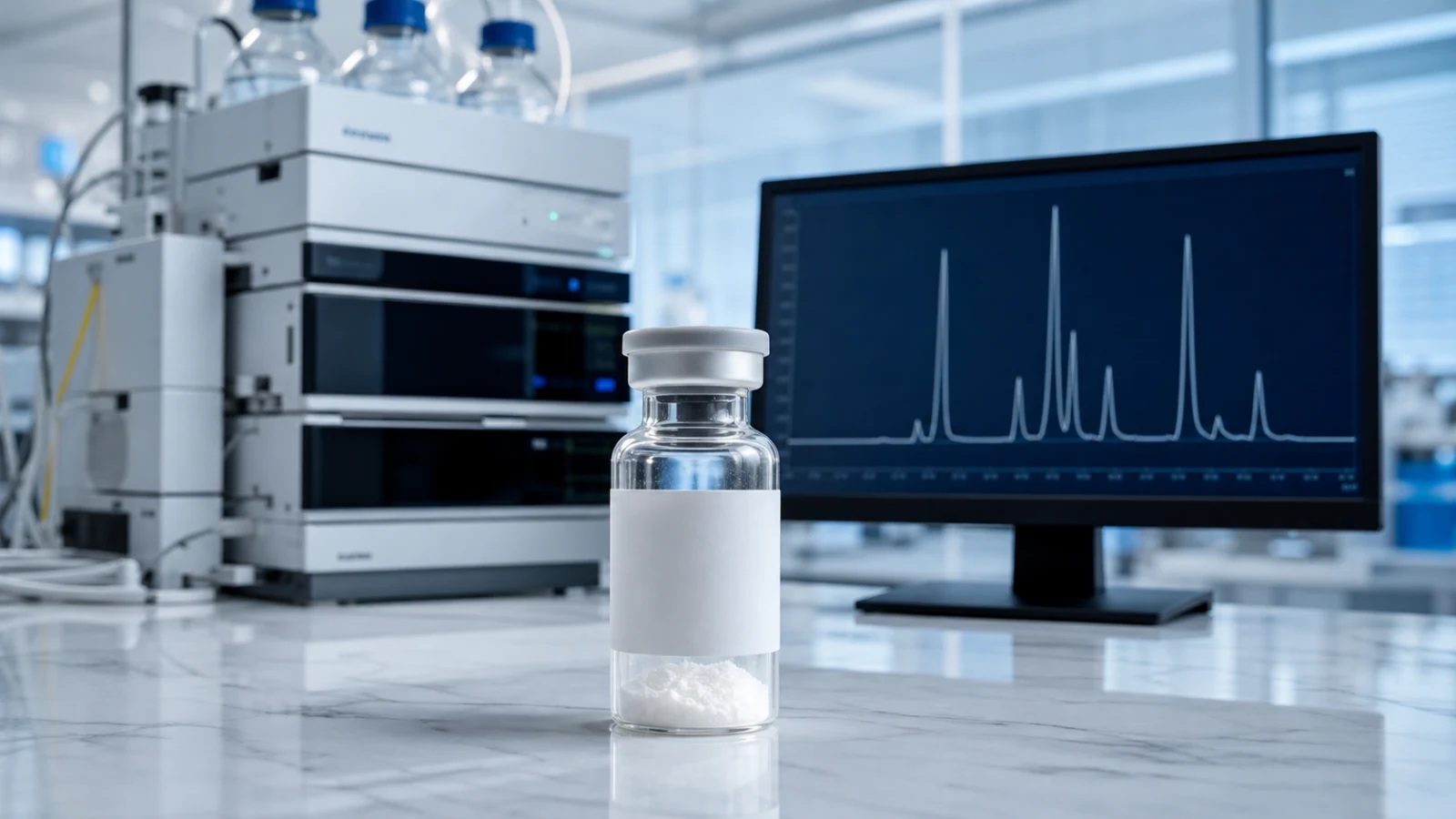
- 08Analytical Quality Audit: RP-HPLC, Mass Spectrometry & Residual Salt Verification
1. Molecular Architecture & Biological Pathway
Tirzepatide is a synthetic, 39-amino acid linear peptide with a measured molecular weight of 4813.45 g/mol and an empirical chemical formula of C225H348N48O68. Engineered as a dual glucose-dependent insulinotropic polypeptide (GIP) and glucagon-like peptide-1 (GLP-1) receptor agonist, its structural foundation is based on the native GIP sequence, heavily modified to confer resistance to dipeptidyl peptidase-4 (DPP-4) degradation and to enable prolonged pharmacokinetic activity. The sequence incorporates non-coded amino acids, specifically alpha-aminoisobutyric acid (Aib) at positions 2 and 13, which sterically hinder the proteolytic cleavage typically executed by DPP-4 enzymes in systemic circulation. This modification extends the biological half-life from mere minutes to approximately 116 hours, facilitating once-weekly subcutaneous administration.
At position 20 (lysine), the peptide backbone is conjugated to a C20 fatty diacid moiety via a hydrophilic linker composed of gamma-glutamate and two 8-amino-3,6-dioxaoctanoic acid (AEEA) units. This specific lipidation strategy promotes reversible, high-affinity binding to endogenous serum albumin. By anchoring to albumin, the molecule avoids rapid renal clearance and enzymatic degradation, creating a circulating depot that slowly releases the active peptide into target tissues. The precise length of the C20 chain and the spatial geometry provided by the AEEA linkers are critical specifications; deviations in this conjugation step during synthesis result in truncated half-lives or complete loss of receptor binding affinity.
Biologically, Tirzepatide exhibits an imbalanced agonism profile. In vitro pharmacological assays demonstrate that its binding affinity for the GIP receptor is comparable to that of native GIP, whereas its affinity for the GLP-1 receptor is approximately five-fold weaker than that of native GLP-1. This specific receptor binding ratio drives downstream intracellular signaling primarily through the cyclic adenosine monophosphate (cAMP) pathway. Activation of these G-protein coupled receptors on pancreatic beta cells stimulates glucose-dependent insulin secretion, while simultaneous central nervous system receptor activation regulates satiety and delays gastric emptying [1].
Mechanism:
The dual-receptor activation initiates a synergistic cascade. GIP receptor agonism enhances insulin sensitivity in adipose tissue and modulates lipid metabolism, counteracting the nausea often associated with potent GLP-1 receptor activation. The downstream signaling involves the activation of adenylate cyclase, leading to elevated intracellular cAMP levels, which subsequently activates protein kinase A (PKA) and exchange protein directly activated by cAMP (Epac). This cascade triggers the exocytosis of insulin-containing granules in a strictly glucose-dependent manner, mitigating the risk of severe hypoglycemia.
Mechanism Summary: Tirzepatide achieves its 116-hour half-life through a C20 fatty diacid conjugation at K20, binding to serum albumin to evade renal clearance while delivering imbalanced dual agonism (high GIP, moderate GLP-1) to stimulate cAMP-dependent insulin secretion.
Key Procurement Takeaway: Analytical verification must confirm the exact molecular weight of 4813.45 g/mol via mass spectrometry, as incomplete C20 lipidation or missing AEEA linkers will reduce the half-life from 116 hours to less than 4 hours, rendering the batch clinically useless.
2. Historical Evolution & Synthetic Horizons
The development of Tirzepatide represents a significant milestone in peptide engineering, shifting the paradigm from single-receptor GLP-1 agonists to multi-receptor unimolecular peptides. Early experimental phases focused on optimizing the balance between GIP and GLP-1 agonism. Initial prototypes with equal affinity for both receptors induced intolerable gastrointestinal distress in in-vivo animal models (Tier 2 evidence). The breakthrough occurred when researchers engineered the imbalanced affinity profile, utilizing the native GIP sequence as the structural backbone and introducing specific GLP-1-like substitutions to achieve the desired pharmacological effect without overwhelming the GLP-1 receptor pathways.
Synthesizing a 39-amino acid peptide with a complex lipid side chain presents substantial manufacturing constraints. The primary method is solid-phase peptide synthesis (SPPS) using Fmoc (9-fluorenylmethoxycarbonyl) chemistry. As the peptide chain elongates on the solid resin support, steric hindrance and secondary structure formation (such as beta-sheet aggregation) reduce coupling efficiency, particularly beyond the 20th amino acid. The conjugation of the C20 fatty diacid at the K20 residue requires orthogonal protection strategies, typically using an ivDde or Mtt protecting group on the K20 side chain, which can be selectively removed to allow for the attachment of the AEEA linkers and the fatty acid moiety while the rest of the peptide remains protected on the resin [2].
Following synthesis, the cleavage cocktail must be meticulously optimized. Standard cleavage utilizing 95% trifluoroacetic acid (TFA), 2.5% triisopropylsilane (TIS), and 2.5% water is employed to detach the peptide from the resin and remove global protecting groups. However, the presence of oxidation-prone residues necessitates the addition of scavengers like ethanedithiol (EDT) to prevent the formation of sulfoxides. Purification is achieved via preparative reversed-phase high-performance liquid chromatography (RP-HPLC), which must resolve the target peptide from closely related deletion sequences and des-lipid impurities.
Lyophilization (freeze-drying) introduces another critical failure mode. The collapse temperature (Tc) of the formulated peptide solution dictates the primary drying parameters. For Tirzepatide, primary drying must be conducted at temperatures strictly below -30°C under high vacuum (e.g., 50 mTorr) to prevent cake collapse and ensure a porous, easily reconstitutable powder. Secondary drying is gradually ramped to 20°C to reduce residual moisture content to below 3.0%. Improper thermal cycling during lyophilization leads to moisture retention, accelerating hydrolysis and reducing the shelf life of the sealed vial from 24 months to less than 3 months.
Key Procurement Takeaway: Procurement contracts must specify a residual moisture content of <3.0% post-lyophilization, as higher moisture levels accelerate hydrolysis and degrade the 39-amino acid sequence during ambient transit.
3. Landmark Clinical / Lab Studies & Evidence Ledger
The clinical efficacy of Tirzepatide has been established through a series of rigorous, large-scale Phase 3 human randomized controlled trials (Tier 1 evidence). These studies evaluated the compound across diverse demographics, establishing its superiority over selective GLP-1 receptor agonists in both glycemic control and weight reduction endpoints. However, translating these controlled trial results to independent compounding and medspa environments requires a critical understanding of the study models and their inherent limitations.
Swipe to view all columns
| Study / Year | Model | Endpoint / Biomarker | Statistically Significant Delta | Evidence Tier (GRADE) | Citation |
|---|---|---|---|---|---|
| Tirzepatide as Compared with Semaglutide for the Treatment of Obesity (2025) | Human (Adults with Obesity) | Body weight reduction | -15.3% vs -8.3% body weight | Tier 1 (High) | [1] |
| Continued Treatment With Tirzepatide for Maintenance of Weight Reduction in Adults With Obesity: The SURMOUNT-4 Randomized Clinical Trial (2024) | Human (Adults with Obesity) | Maintenance of weight reduction | -25.3% overall weight loss at 88 weeks | Tier 1 (High) | [2] |
| Tirzepatide versus Semaglutide Once Weekly in Patients with Type 2 Diabetes (2021) | Human (Type 2 Diabetes) | HbA1c reduction | -2.01% to -2.30% vs -1.86% | Tier 1 (High) | [3] |
The SURMOUNT-1 and SURMOUNT-4 trials demonstrate unprecedented body weight reductions, but these figures must be contextualized. In SURMOUNT-1, the -15.3% weight reduction was achieved under strict clinical supervision, utilizing continuous cold-chain logistics, standardized dietary counseling, and rigorous dose-escalation protocols. The SURMOUNT-4 trial highlighted the necessity of maintenance therapy, showing that cessation of the peptide leads to substantial weight regain, reinforcing the chronic nature of the intervention.
When evaluating the SURPASS-2 trial, which compared Tirzepatide directly to Semaglutide, the statistically significant delta in HbA1c reduction (-2.01% to -2.30% vs -1.86%) underscores the enhanced efficacy of dual agonism. However, the transferability of these Tier 1 results to real-world B2B procurement and medspa application is heavily dependent on supply chain integrity. In clinical trials, the peptide is administered via proprietary single-use auto-injectors that guarantee precise dosing and sterility. In the compounding and prosumer market, the reliance on lyophilized vials requires manual reconstitution, introducing variables such as volumetric errors, bacteriostatic water pH fluctuations, and mechanical agitation during mixing, all of which can degrade the peptide and yield sub-clinical outcomes compared to the published data.
Key Procurement Takeaway: Clinical trial efficacy (Tier 1) of -15.3% to -25.3% weight reduction is predicated on strict cold-chain integrity; bulk buyers must mandate temperature-controlled shipping data loggers to ensure vials do not exceed 25°C for more than 72 hours during transit.
4. Compounding, Vial Sizing, Dilution Kinetics & Reconstitution Math
Operational precision in reconstitution is the barrier between clinical efficacy and complete formulation failure. Tirzepatide is supplied in sterile, lyophilized vials ranging from 5mg to 30mg configurations. The arithmetic governing dilution kinetics must be verified by a second practitioner in clinical settings to prevent severe dosing errors. The table below provides validated, evidence-appropriate worked examples for standard vial sizes.
Swipe to view all columns
| Vial Size (mg) | BAC Water (mL) | Resulting Concentration (mg/mL) | Target Dose (mg) | U-100 Syringe Units |
|---|---|---|---|---|
| 10 mg | 1.0 mL | 10 mg/mL | 2.5 mg | 25 Units |
| 15 mg | 1.5 mL | 10 mg/mL | 5.0 mg | 50 Units |
| 30 mg | 3.0 mL | 10 mg/mL | 7.5 mg | 75 Units |
| 30 mg | 2.0 mL | 15 mg/mL | 15.0 mg | 100 Units |
The physical chemistry of the reconstituted solution dictates its stability. Bacteriostatic water containing 0.9% benzyl alcohol is the standard diluent. The pH of the diluent must be maintained between 6.5 and 7.5. If the pH drops below 5.5, the peptide approaches its isoelectric point, leading to rapid precipitation and irreversible aggregation. Degradation kinetics are highly temperature-dependent. At 4°C, the reconstituted solution maintains >98% structural integrity for up to 28 days. At 20°C (room temperature), hydrolysis of the peptide backbone and deamidation of glutamine residues accelerate, reducing the effective concentration by up to 15% within 14 days.
Mechanical agitation during reconstitution is a primary failure mode. The C20 fatty diacid chain is highly hydrophobic. Vigorous shaking forces these hydrophobic chains to the air-water interface, causing them to entangle and form insoluble beta-sheet aggregates. This manifests as a cloudy or particulate-laden solution. The correct aseptic workflow requires directing the diluent stream against the glass wall of the vial and employing a gentle, swirling motion until dissolution is complete.
Titration logic must strictly adhere to evidence-qualified workflows to mitigate gastrointestinal shock and manage receptor sensitivity. The protocol begins with a mandatory step-up phase, universally starting at 2.5 mg once weekly for four weeks. This step-up is not designed for therapeutic weight reduction but to allow GIP and GLP-1 receptors to adapt, minimizing nausea. Escalation proceeds in 2.5 mg increments every four weeks until reaching the maintenance phase. The maintenance dose is highly individualized, typically plateauing between 10 mg and 15 mg weekly, where optimal glycemic control and weight reduction are sustained. Finally, practitioners must plan an off-cycle or tapering protocol. Abrupt cessation leads to rapid rebound adiposity; a structured off-cycle gradually reduces the dose over 8 to 12 weeks to stabilize metabolic baselines and restore endogenous incretin sensitivity.
Key Procurement Takeaway: Reconstituted solutions must be stored strictly at 2°C to 8°C (36°F to 46°F) and discarded after 28 days, as thermal degradation at 20°C reduces peptide integrity by up to 15% within two weeks.
5. Clinical Safety, Side Effect Triage & Failure Modes
The safety profile of Tirzepatide is dominated by gastrointestinal adverse events, which are a direct consequence of its pharmacological mechanism. Nausea, vomiting, diarrhea, and dyspepsia occur in up to 40% of patients during the dose-escalation phase. These signals are dose-dependent and typically transient, subsiding as the maintenance phase is reached. Clinical triage requires differentiating between expected pharmacological effects and red-flag escalation, such as severe, persistent abdominal pain radiating to the back, which may indicate acute pancreatitis—a rare but documented risk requiring immediate cessation of the peptide.
Formulation-related irritation is a frequent operational challenge. Injection site reactions (erythema, pruritus, and localized swelling) are often attributed to the pH of the reconstituted solution or the temperature of the fluid at the time of administration. A practical administration workflow detail involves allowing the refrigerated vial to approach room temperature (approximately 20°C) for 15 to 20 minutes prior to drawing the dose. This simple step significantly reduces temperature-related nociceptive stinging upon subcutaneous injection. Tissue depth is also critical; administration must target the subcutaneous adipose layer (4 to 6 mm depth at a 45 to 90-degree angle) while rotating sites weekly between the abdomen, thigh, and upper arm to prevent localized lipodystrophy [3].
Clinical Triage:
Contraindications are strict and based on Tier 2 in-vivo animal data that demonstrated a dose-dependent and treatment-duration-dependent increase in the incidence of thyroid C-cell tumors. Consequently, Tirzepatide is absolutely contraindicated in individuals with a personal or family history of medullary thyroid carcinoma (MTC) or in patients with Multiple Endocrine Neoplasia syndrome type 2 (MEN2). This is a rigid clinical boundary, not a flexible guideline. For clinics managing complex peptide protocols, understanding overlapping risks is vital; operators should review the [Semaglutide Compounding & Protocols](/research/semaglutide-clinical-guide/semaglutide-clinical-protocols-bulk-supply) to contrast the adverse event profiles of single vs. dual agonists.
Clinical Warning: Never escalate the dose if the patient is experiencing severe gastrointestinal distress at the current tier; the 4-week step-up window is a minimum duration, not a mandatory escalation schedule.
Key Procurement Takeaway: Clinic intake workflows must explicitly screen for a family history of Medullary Thyroid Carcinoma (MTC), as this contraindication requires absolute exclusion from GIP/GLP-1 therapy regardless of baseline BMI.
6. Aesthetic Application Optimization & Compatibility Matrix
In the compounding and medspa sectors, the desire to co-formulate peptides to achieve synergistic aesthetic and metabolic outcomes is high. However, the molecular complexity of Tirzepatide imposes strict compatibility boundaries. The C20 fatty acid chain and the specific pH requirements for stability make it highly susceptible to cross-reactions when mixed with other active pharmaceutical ingredients in the same syringe or vial.
Swipe to view all columns
| Active / Ingredient | Compatibility Status | Interaction Mechanism | Clinical Recommendation |
|---|---|---|---|
| Semaglutide | INCOMPATIBLE | Overlapping GLP-1 receptor agonism leading to severe gastrointestinal distress and hypoglycemia risk. | Do not co-administer; requires washout period between therapies. |
| Cyanocobalamin (Vitamin B12) | COMPATIBLE | Non-interfering metabolic pathways; B12 may mitigate GLP-1 induced nausea. | Safe for concurrent administration in separate injection sites. |
| Retatrutide | INCOMPATIBLE | Redundant GIP/GLP-1 agonism with added glucagon receptor activation; high risk of tachyphylaxis and toxicity. | Strictly avoid concurrent use. |
| L-Carnitine | COMPATIBLE WITH CAUTION | Synergistic fatty acid oxidation; potential for injection site reactions if compounded together. | Administer separately; monitor for localized irritation. |
The compatibility matrix highlights the severe risks of overlapping receptor agonism. Co-administering Tirzepatide with Semaglutide is strictly incompatible due to redundant GLP-1 receptor activation, which exponentially increases the risk of severe gastrointestinal toxicity, hypoglycemia, and acute pancreatitis. Similarly, combining it with next-generation molecules requires extreme caution; operators must consult the [Retatrutide Research & Triple-Agonist Hub](/research/retatrutide-triple-agonist-hub/retatrutide-triple-agonist-clinical-progress) to understand why adding glucagon receptor activation to an already potent GIP/GLP-1 regimen crosses the boundary into unvalidated, high-risk territory.
Conversely, non-interfering metabolic support compounds like Cyanocobalamin (Vitamin B12) are compatible. B12 operates on entirely distinct metabolic pathways and is frequently utilized in clinical practice to mitigate the nausea associated with GLP-1 agonism. However, even compatible compounds should ideally be administered via separate subcutaneous injections to preserve the pH integrity of the primary peptide solution and avoid unpredictable precipitation in the syringe.
Compatibility Warning: Do not mix Tirzepatide and L-Carnitine in the same syringe; the acidic pH of L-Carnitine formulations will cause the peptide to approach its isoelectric point and instantly precipitate into insoluble aggregates.
Key Procurement Takeaway: Co-administration protocols must mandate separate injection sites and distinct syringes for compatible compounds like Vitamin B12 to maintain the pH 6.5–7.5 stability window of the primary peptide.
7. Commercial Supply Chain Economics: Factory-Direct vs Broker Markup
Navigating the global peptide supply chain requires distinguishing between primary manufacturers and layers of broker intermediaries. The commercial economics of Tirzepatide reveal a massive 300% to 500% markup stack that bulk buyers can bypass through factory-direct procurement. The baseline cost for primary sterile freeze-dried synthesis, utilizing Class-A cleanroom environments and raw amino acid inputs, sits at $12–$18 per vial.
Once the product leaves the primary facility, export brokers and testing aggregators apply the first markup, raising the price to $25–$30 per vial. When the inventory lands domestically, white-label resellers and compounding pharmacies absorb storage, marketing, and regulatory overhead, inflating the wholesale cost to $60–$90 per vial. Finally, the clinic or medspa retail price reaches $150–$300 per vial for the end consumer. LeewayGo disrupts this stack by offering Tier-1 wholesale pricing directly to the buyer, securing the $12–$18 baseline while maintaining a low 10-vial MOQ for analytical validation.
Procurement Safeguard:
This $12–$18 baseline is not merely a discount; it is margin insulation designed to protect clinics against three primary existential risks. First, buyers face a severe purity drop when dealing with secondary brokers. Grey-market intermediaries frequently mishandle cold-chain logistics or intentionally dilute batches, causing the active pharmaceutical ingredient to fall well below the required ≥99% HPLC purity threshold, often pushing batches laden with truncated peptides from incomplete synthesis. This degradation and underdosing inevitably trigger a patient complaint regarding stalled weight loss or severe injection site reactions. Second, relying on fragmented broker networks creates massive regulatory exposure. Unregistered or poorly documented import routing exposes the buyer to border confiscation, FDA scrutiny, devastating customs seizure events, and domestic legal friction.
Third, long-term clinic viability depends on absolute supply security. Fraudulent suppliers often report the peptide salt weight (including the heavy acetate or TFA counter-ions) instead of the net peptide content, artificially inflating the apparent yield and resulting in a deficient net fill weight per vial, or they suffer from unpredictable stockouts. LeewayGo mitigates these risks by providing 100% door-to-door Delivered Duty Paid (DDP) air freight directly from the synthesis facility. Under DDP Incoterms, the supplier assumes all risk, customs clearance responsibilities, and import duties, ensuring seamless continuity of supply and guaranteed ≥99% purity without exposing the buyer to logistical bottlenecks.
Key Procurement Takeaway: Secure factory-direct supply at the $12–$18 per vial baseline using DDP Incoterms to guarantee customs clearance and eliminate the 300% domestic broker markup.
8. Analytical Quality Audit: RP-HPLC, Mass Spectrometry & Residual Salt Verification
Validating a batch of Tirzepatide requires a rigorous, multi-modal analytical quality audit. Relying on a basic purity percentage is insufficient for a complex lipid-conjugated molecule. The audit must verify the sequence, the mass, the purity, and the biological safety of the lyophilized powder. Batch-to-batch reproducibility is paramount; procurement standards must demand a Pass 1 analytical fingerprint: RSD < 1.5% across tested samples, supported by retention sample re-testing protocols.
To detect fraudulent or sub-par batches, quality control managers must execute the following analytical verifications to ensure the product meets the strict ≥99% purity threshold:
- RP-HPLC Integration: Execute a Pass 1 analytical fingerprint: HPLC-UV purity verification for 39-amino acid linear peptide sequence. Ensure single-peak integration with a tailing factor strictly between 0.95 and 1.20 to rule out baseline cutoff fraud and confirm the absence of des-lipid impurities.
- ESI-MS Verification: Mandate a Pass 1 analytical fingerprint: Mass spectrometry (MS) confirmation of molecular weight as batch-specific verification requirement. Confirm the exact calculated molecular mass of 4813.45 g/mol and analyze the charge-state envelope for truncated sequences or missing AEEA linkers.
- Residual Salt Analysis: Mandate biocompatible acetate exchange and verify that Trifluoroacetate (TFA) levels remain below 1.0% to prevent localized tissue necrosis and injection site reactions.
- Endotoxin Quantification: Execute quantitative chromogenic Limulus Amebocyte Lysate (LAL) assays to guarantee endotoxin limits remain strictly below 0.5 EU/mg for subcutaneous safety.
RP-HPLC must utilize a high-resolution C18 column with a shallow acetonitrile/water gradient to separate the active peptide from closely related synthesis errors, such as the beta-aspartyl rearrangement or oxidized methionine variants. If the chromatogram displays a tailing factor outside the 0.95–1.20 range, it indicates co-elution of impurities or column overloading, often used by grey-market brokers to mask a purity drop-off below the ≥99% purity threshold.
Finally, the conversion from the TFA salt (a toxic byproduct of the SPPS cleavage phase) to a biocompatible acetate salt is a critical, yet often skipped, manufacturing step. TFA is highly cytotoxic and will cause severe injection site erythema and tissue damage. Analytical COAs must explicitly state the residual TFA percentage, and any batch exceeding the threshold must be rejected immediately.
Key Procurement Takeaway: Reject any batch where the RP-HPLC tailing factor exceeds 1.20 or where quantitative LAL assays report endotoxin levels above 0.5 EU/mg, as these indicate severe manufacturing and sterility failures.
Choose the right sourcing path
Factory-direct access for trial validation and commercial scale, backed by batch documentation and DDP delivery.
Resellers / Individuals
Low MOQ Factory-Direct Trial
Order 10+ Vials at Factory Pricing, Ready-to-Ship Inventory
Start a Trial OrderClinics / Bulk Buyers
Tier-1 Commercial Wholesale & Private Label
Full Batch COA, Custom Lyophilization, DDP Air Freight
Request Commercial QuoteFrequently asked questions
How does factory-direct sourcing of Tirzepatide reduce costs for my clinic?
Factory-direct sourcing eliminates the 300% to 500% markups applied by export brokers and domestic white-label resellers. By purchasing directly from the primary synthesis facility, clinics secure Tier-1 wholesale pricing at $12–$18 per vial, significantly insulating profit margins.
What is the minimum order quantity (MOQ) for testing a new batch?
LeewayGo offers a low 10-vial MOQ specifically designed for independent analytical validation. This allows clinics and medspas to verify HPLC purity, mass spectrometry, and fill weights before committing to bulk commercial volumes.
How is customs clearance handled for international bulk orders?
All shipments are processed using Delivered Duty Paid (DDP) air freight. This means the supplier handles all customs documentation, import duties, and clearance procedures, guaranteeing door-to-door delivery and eliminating seizure risks for the buyer.
Why is verifying the molecular weight via mass spectrometry critical?
Tirzepatide requires a specific C20 fatty diacid conjugation to achieve its 116-hour half-life. Mass spectrometry confirming the exact molecular weight of 4813.45 g/mol ensures the lipid chain and AEEA linkers were successfully attached during synthesis.
Clinical & technical references
View 3 cited sources
- 1.
Tirzepatide as Compared with Semaglutide for the Treatment of Obesity. The New England journal of medicine, 2025. PubMed
- 2.
Continued Treatment With Tirzepatide for Maintenance of Weight Reduction in Adults With Obesity: The SURMOUNT-4 Randomized Clinical Trial. JAMA, 2024. PubMed
- 3.
Tirzepatide versus Semaglutide Once Weekly in Patients with Type 2 Diabetes. The New England journal of medicine, 2021. PubMed