Understanding Tirzepatide Labels: mg, mL, mg/mL, and Total Content per Box
5 min read
On this page
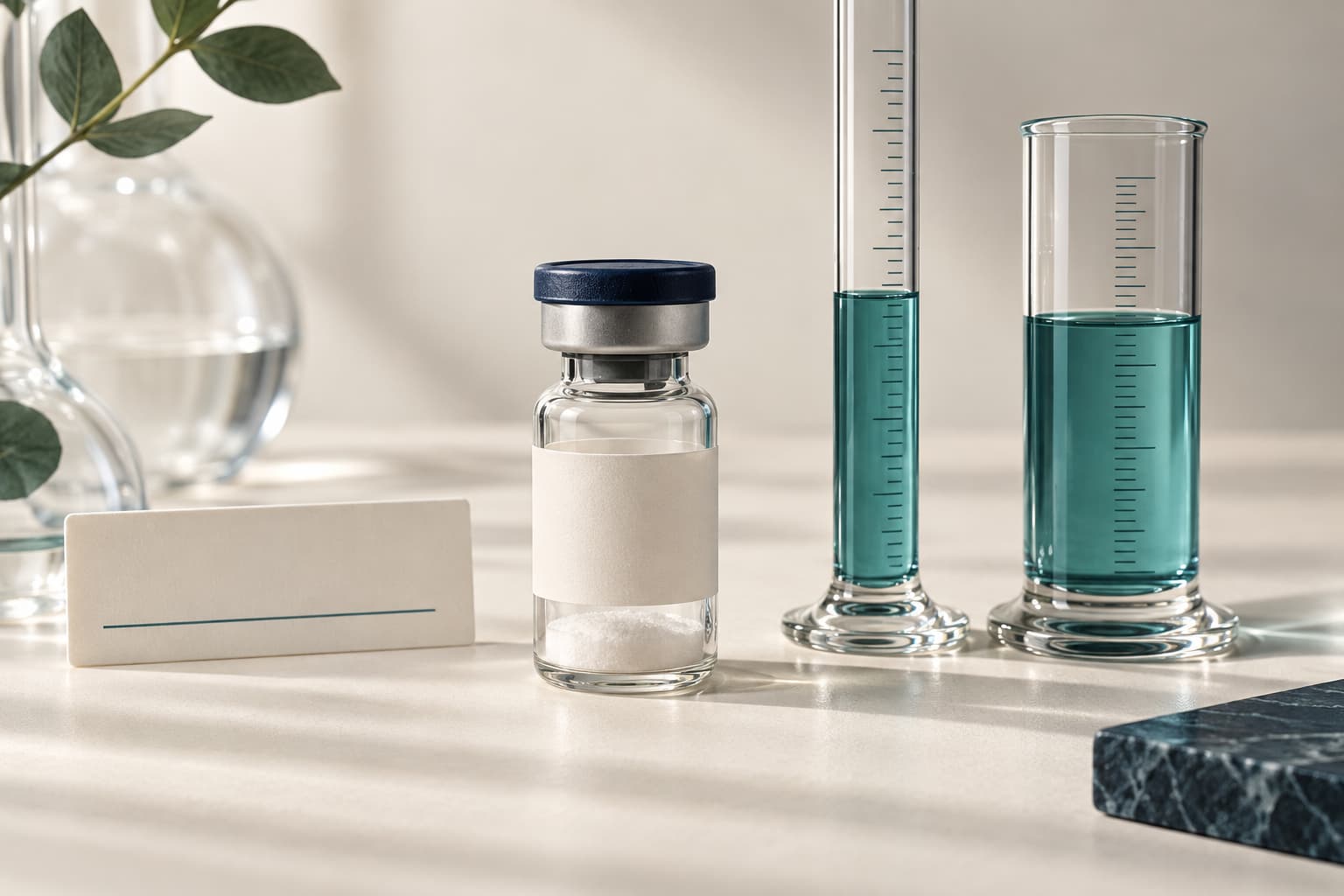
When sourcing or managing research peptide inventories, navigating product labeling can sometimes introduce unexpected points of confusion. Different manufacturers, compounding pharmacies, and global suppliers present concentration and content metrics in varied formats. A label indicating a specific concentration in milligrams per milliliter (mg/mL) can look entirely different from a label highlighting total content per vial or box, yet both might refer to equivalent mass quantities depending on reconstitution and volume.
For clinics, aesthetic centers, individual buyers, resellers, and researchers alike, mastering how to read these specifications prevents comparison errors and ensures clear inventory management.
The Core Metrics: What Do mg, mL, and mg/mL Mean?
To evaluate peptide products accurately, it helps to break down each unit of measurement found on packaging labels:
- Milligrams (mg): This measures absolute mass—the actual physical weight of the peptide substance inside the container. Whether dealing with a lyophilized cake or a liquid solution, milligrams tell you exactly how much active compound is present.
- Milliliters (mL): This measures liquid volume. In liquid solutions or reconstituted vials, it defines the amount of solvent present.
- Concentration (mg/mL): This expresses the ratio of mass to volume. For instance, a concentration of 10 mg/mL means that every single milliliter of the liquid contains 10 milligrams of the peptide.
Discussions across online research communities frequently highlight how easily these terms are mixed up. For example, a newcomer reviewing community threads might encounter questions regarding why a container label lists a ratio like tirzepatide/B6 10mg/10mg while another reference point on the packaging mentions a higher aggregate mass like 40mg. Clarifications within these communities often point out that if a solution has a concentration of 10 mg of active peptide per mL and spans a total volume of 4mL within that specific container, the aggregate mass totals 40mg of active substance.
Simultaneously, experienced handlers in various forums frequently recommend shifting away from thinking purely in terms of liquid volume (mL) or syringe units, advising peers to focus directly on absolute mass (mg) to avoid calculation errors when switching between different concentrations or sources.
Regulatory Context and Standardization Challenges
The potential for confusion surrounding concentration metrics is not unique to multi-ingredient solutions. Regulatory bodies have actively flagged the risks associated with varying measurement units. For instance, the U.S. Food and Drug Administration (FDA) issued safety alerts addressing dosing and labeling confusions associated with compounded products (such as warnings directed at compounded semaglutide), emphasizing that discrepancies between volumetric measurements, concentrations, and total milligram contents can lead to significant handling errors. While such federal warnings target specific compounded liquids rather than serving as clinical trials for tirzepatide, they underscore a broader industry takeaway: clear distinction between total mass (mg) and liquid concentration (mg/mL) is vital for anyone evaluating peptide solutions.
Lyophilized Formats vs. Liquid Solutions: Comparing LeewayGo Specifications
When sourcing raw or research-grade materials through platforms like LeewayGo, products are typically supplied in lyophilized (freeze-dried) powder form rather than pre-mixed liquid solutions.
- Lyophilized Presentation: Vials containing freeze-dried cake material list the total mass per vial—such as Tirzepatide 5mg*10vials, Tirzepatide 10mg*10vials, or Tirzepatide 30mg*10vials.
- Batch Specifics: Appearance is categorized strictly as lyophilized material, where batch specifications apply. Because exact purity percentages can vary between manufacturing runs, uniform batch purity data is not broadly generalized across the catalog.
- Verification: Buyers and researchers looking to verify specific batch characteristics can cross-reference documentation via the Verify COA portal.
When dealing with lyophilized vials, the calculation of mg/mL only occurs after the researcher or facility reconstitutes the powder with a designated volume of bacteriostatic water or sterile diluent. For instance, taking a 10mg lyophilized vial and adding 1mL of diluent yields a concentration of 10mg/mL. Adding 2mL of diluent results in a concentration of 5mg/mL, even though the total mass of the peptide in the vial remains precisely 10mg.
Best Practices for Buyers, Resellers, and Researchers
When comparing product options across different vendors or managing bulk inventory for research institutions, keep these practical comparison guidelines in mind:
- Always Compare Total Mass (mg), Not Just Vial Count or Volume: A box containing ten vials of 5mg (50mg total per box) differs fundamentally from a box of ten vials of 30mg (300mg total per box), regardless of how many milliliters of solvent you intend to use for reconstitution.
- Account for Reconstitution Volumes: Understand that liquid concentration (mg/mL) is a variable dictated by how much liquid you introduce to a lyophilized cake. Never assume two vials share the same concentration simply because their liquid volumes look identical.
- Review Batch-Specific Documentation: Always check analytical documentation associated with the specific batch ID rather than relying on generic product descriptions. You can inspect independent batch breakdowns at LeewayGo Verify COA.
- Plan Custom or Bulk Requirements: For specialized institutional requirements, custom packaging volumes, or tiered wholesale inquiries, utilize the direct LeewayGo Quote Request channel.
To dive deeper into handling protocols, storage parameters, and comprehensive background data, explore the centralized Tirzepatide Ultimate Guide.