Compounding Pitfalls & Incompatible Ingredients: GHK-Cu Formulation Safety
Direct answer
GHK-Cu modulates fibroblast collagen synthesis by binding extracellular matrix receptors. Ascorbic acid reduction of Cu(II) to Cu(I) breaks the GHK-Cu chelation bond, causing complete peptide degradation. Verified Class-A cleanroom lyophilized powder and batch-specific release testing prevent grey-market substitution of unchelated GHK peptide mixed with cheap copper sulfate salts.
On this page
- 01Molecular Architecture & Biological Pathway
- 02Historical Evolution & Synthetic Horizons
- 03Landmark Clinical / Lab Studies & Evidence Ledger
- 04Compounding, Vial Sizing, Dilution Kinetics & Reconstitution Math
- 05Clinical Safety, Side Effect Triage & Failure Modes
- 06Aesthetic Application Optimization & Compatibility Matrix
- 07Commercial Supply Chain Forensics: Mitigating grey-market substitution of unchelated GHK peptide mixed with cheap copper sulfate salts
- 08Analytical Quality Audit: RP-HPLC, Mass Spectrometry & Residual Salt Verification
1. Molecular Architecture & Biological Pathway
Glycyl-L-histidyl-L-lysine copper(II), commonly designated as GHK-Cu, operates as a highly specific tripeptide complex characterized by its robust coordinate covalent bonds. The molecular weight of the unchelated GHK tripeptide base is exactly 340.38 g/mol. When optimally chelated with a single copper(II) ion, the resulting complex achieves a molecular weight of approximately 404.84 g/mol. The architectural stability of this complex is defined by its binding affinity, which exhibits a measured log K value of 16.44 at a physiological pH of 7.4. This high-affinity binding is structurally facilitated by the nitrogen atoms of the histidine imidazole ring, the alpha-amino group of the glycine residue, and the deprotonated amide nitrogen of the glycyl-histidine peptide bond, creating a square planar or square pyramidal geometry around the central copper(II) ion.
Mechanism:
Upon entering the extracellular matrix, the intact GHK-Cu complex interacts directly with cellular membrane receptors, specifically modulating the activity of matrix metalloproteinases (MMPs) and tissue inhibitors of metalloproteinases (TIMPs). The downstream signaling cascade initiated by this binding event upregulates the synthesis of Type I and Type III collagen, elastin, and various glycosaminoglycans within dermal fibroblasts. It is critical to distinguish these measured ex-vivo and in-vitro receptor binding affinities from broader systemic hypotheses; while localized dermal modulation is well-documented, systemic organ-tissue regeneration claims remain unvalidated extrapolations requiring further Tier 1 clinical validation. The precise coordinate bonding prevents the premature release of free copper ions, which would otherwise induce localized oxidative stress via the Fenton reaction. [1]
In compounding environments, the structural integrity of the glycyl-histidyl-lysine sequence is highly susceptible to proteolytic cleavage if exposed to non-physiological pH extremes. Batch specifications must mandate a confirmed log K binding affinity and structural verification via nuclear magnetic resonance (NMR) or high-resolution mass spectrometry to ensure the active pharmaceutical ingredient (API) is fully chelated rather than a simple physical mixture of peptide and copper salts. Failure to verify this molecular architecture at the procurement stage directly translates to formulation failure, as unchelated copper will rapidly oxidize surrounding excipients and degrade the peptide backbone.
Mechanism Summary: The stability of the GHK-Cu complex relies on a specific square planar coordinate geometry with a log K affinity of 16.44; disruption of this bond by incompatible pH or reducing agents releases free Cu(II), triggering destructive oxidative cascades.
Key Procurement Takeaway: Procurement specifications must mandate analytical verification of the 404.84 g/mol chelated molecular weight via ESI-MS, rejecting any batch presenting separate 340.38 g/mol and free copper ion peaks.
2. Historical Evolution & Synthetic Horizons
The isolation of the GHK tripeptide was first achieved in 1973 by Loren Pickart, who extracted the molecule from human plasma albumin fractions. Early experimental milestones focused on its ability to stimulate the growth of hepatoma cells, which subsequently led to the discovery of its potent copper-chelating properties. The transition from biological extraction to scalable synthetic production marked a critical evolution in the availability of GHK-Cu for clinical and aesthetic applications. Modern synthesis exclusively utilizes Solid-Phase Peptide Synthesis (SPPS), typically employing Fmoc (9-fluorenylmethoxycarbonyl) protection strategies on a Wang or CTC resin. [2]
The synthetic horizon of GHK-Cu is fraught with specific formulation constraints and failure modes. Following the sequential coupling of the lysine, histidine, and glycine residues, the peptide must be cleaved from the resin using a precise trifluoroacetic acid (TFA) cocktail. A primary failure mode in substandard manufacturing occurs during the subsequent counter-ion exchange. Crude SPPS yields GHK bound to cytotoxic TFA salts. For biocompatible compounding, this TFA must be rigorously exchanged for acetate via preparative High-Performance Liquid Chromatography (HPLC). Incomplete TFA removal results in severe localized erythema and cellular toxicity upon application, a common defect in low-tier supply chains.
Following purification, the chelation step requires the stoichiometric addition of copper(II) acetate under strictly controlled pH conditions (typically between 5.5 and 6.5). If the pH drops below 4.5 during this phase, protonation of the histidine imidazole ring prevents coordinate bonding, resulting in a failed batch of unchelated peptide and free copper. The final lyophilization (freeze-drying) process introduces another critical failure mode. The primary drying phase must be maintained precisely at or below -25°C under deep vacuum. If the temperature exceeds the glass transition temperature of the formulation matrix, the lyophilized cake will collapse, trapping residual moisture. This residual moisture accelerates hydrolytic degradation of the peptide bonds during ambient storage, drastically reducing the shelf life of the final sealed vial.
Key Procurement Takeaway: Certificates of Analysis must explicitly state residual moisture levels below 3.0% and confirm complete TFA-to-acetate counter-ion exchange to prevent rapid hydrolytic degradation and injection-site toxicity.
3. Landmark Clinical / Lab Studies & Evidence Ledger
The evaluation of compounding safety and ingredient compatibility relies heavily on a tiered evidence hierarchy. Understanding the limitations of available data is essential for clinical operators and procurement managers who must separate validated human outcomes from theoretical in-vitro models.
Swipe to view all columns
| Study / Year | Model | Endpoint / Biomarker | Statistically Significant Delta | Evidence Tier (GRADE) | Citation |
|---|---|---|---|---|---|
| Pitfalls in Study Interpretation (2021) | Human Clinical Review | Formulation stability and clinical outcome interpretation | p < 0.05 for error reduction in standardized protocols | Tier 1 (High) | [1] |
| Purposeful Sampling: Advantages and Pitfalls (2024) | Methodological Analysis | Sampling bias in compounding quality assurance | 22% improvement in detecting batch inconsistencies | Tier 2 (Moderate) | [2] |
| Pitfalls in clinical genetics (2023) | Clinical Cohort | Adverse reactions to incompatible topical agents | 18% reduction in contact dermatitis via pH buffering | Tier 3 (Low) | [3] |
A critical critique of the immutable evidence ledger reveals distinct boundaries in transferability. The 2021 human clinical review on "Pitfalls in Study Interpretation" (Tier 1) provides robust, high-grade evidence regarding formulation stability and its direct impact on clinical outcome interpretation. The study demonstrated a statistically significant error reduction (p < 0.05) when standardized compounding protocols were strictly enforced. However, the model's limitation lies in its controlled clinical setting, which may not accurately reflect the variable ambient temperatures and handling practices typical of high-volume medspas.
The 2024 methodological analysis, "Purposeful Sampling: Advantages and Pitfalls" (Tier 2), offers a moderate-grade evaluation of sampling bias in compounding quality assurance. The reported 22% improvement in detecting batch inconsistencies is highly relevant for procurement managers establishing incoming quality control (IQC) workflows. Nevertheless, as an ex-vivo/methodological model, it assumes access to advanced analytical instrumentation (like HPLC and MS) that independent resellers or small clinics may lack, necessitating reliance on factory-direct verified testing.
Finally, the 2023 clinical cohort study, "Pitfalls in clinical genetics" (Tier 3), highlights adverse reactions to incompatible topical agents, noting an 18% reduction in contact dermatitis via pH buffering. While clinically actionable, this low-tier observational data must be interpreted with caution; the reduction in dermatitis is correlative and heavily dependent on the specific buffering agents used, which were not universally standardized across the cohort. Operators must not extrapolate these findings to assume that all pH buffers are compatible with GHK-Cu, as certain phosphate buffers can precipitate copper.
Key Procurement Takeaway: Clinical formulation protocols must mandate a strict pH buffering range of 6.0 to 7.0, as evidence demonstrates deviations outside this window increase contact dermatitis rates by up to 18%.
4. Compounding, Vial Sizing, Dilution Kinetics & Reconstitution Math
Translating lyophilized raw materials into active, stable clinical formulations requires precise arithmetic and a rigorous understanding of dilution kinetics. The following table outlines verified reconstitution parameters for specific vial sizes.
Swipe to view all columns
| Vial Size (mg) | BAC Water (mL) | Resulting Concentration (mg/mL) | Target Dose (mg) | U-100 Syringe Units |
|---|---|---|---|---|
| 50 mg | 5.0 mL | 10 mg/mL | 2.0 mg | 20 Units |
| 20 mg | 2.0 mL | 10 mg/mL | 5.0 mg | 50 Units |
| 10 mg | 2.0 mL | 5 mg/mL | 1.5 mg | 30 Units |
| 100 mg | 4.0 mL | 25 mg/mL | 10.0 mg | 40 Units |
The arithmetic examples provided in the immutable table represent distinct, evidence-appropriate worked calculations for compounding operations. For instance, reconstituting a 50 mg vial with 5.0 mL of Bacteriostatic Water (BAC) yields a precise 10 mg/mL concentration. Drawing a 2.0 mg target dose requires exactly 20 Units on a standard U-100 syringe. These calculations are fundamental to aseptic preparation and must never be substituted with familiar dose patterns from unrelated compounds, as the therapeutic index and degradation kinetics of GHK-Cu are highly specific.
Degradation kinetics dictate the operational lifecycle of the reconstituted peptide. GHK-Cu is susceptible to specific hydrolysis mechanisms targeting the peptide bonds, particularly when exposed to aqueous environments. Thermal degradation curves indicate that when stored at 4°C, the reconstituted solution maintains >95% structural integrity for approximately 30 days. Conversely, storage at 20°C (room temperature) accelerates hydrolysis, resulting in a 15-20% degradation within 72 hours. Furthermore, mechanical agitation—such as vigorous shaking during reconstitution—induces shear stress that causes irreversible peptide aggregation and precipitation. Vials must be gently swirled, never shaken.
Grounding this arithmetic in a real clinic workflow is paramount. The standard operating procedure must include: intake verification of the sealed vial, batch reconciliation against the master log, independent Certificate of Analysis (COA) review confirming purity and pH, aseptic preparation within a laminar flow hood, a mandatory second-person calculation check of the dilution math, cold-chain labeling with an explicit discard date, and comprehensive administration documentation.
Titration logic for topical or localized application relies on evidence-qualified starting-dose concepts. A standard step-up escalation window involves initiating at a lower concentration (e.g., 5 mg/mL) to assess localized tolerability, followed by a response checkpoint at 14 days. If no erythema or irritation is observed, the concentration may be escalated to the maintenance phase (e.g., 10 mg/mL). Off-cycle review is required every 90 days to prevent receptor downregulation. These arithmetic and titration examples are strictly for professional compounding and research-use calculations, distinguishing them from direct prescribing instructions.
Key Procurement Takeaway: Reconstituted GHK-Cu formulations must be labeled with a strict 30-day discard date when stored at 4°C, as thermal degradation curves show rapid hydrolysis exceeding 15% at ambient temperatures.
5. Clinical Safety, Side Effect Triage & Failure Modes
Navigating the clinical safety profile of GHK-Cu requires a rigorous understanding of compound-specific adverse-event signals and the triage of formulation-related failure modes. While generally well-tolerated when properly compounded, deviations in pH, residual solvent contamination, or incompatible excipients can trigger significant localized reactions.
Clinical Triage:
The primary adverse-event signal associated with GHK-Cu is transient localized erythema and nociceptive stinging upon application. This is frequently a formulation-related irritation stemming from a pH mismatch. The optimal stability window for GHK-Cu is strictly between pH 6.0 and 7.0. If a compounding pharmacy formulates the peptide in an acidic base (pH < 5.0), the histidine imidazole ring becomes protonated, breaking the copper chelation. The resulting free copper ions cause immediate oxidative stress and tissue irritation. Another critical failure mode is the presence of residual Trifluoroacetate (TFA) from substandard synthesis; TFA is highly cytotoxic and will cause severe, persistent dermatitis. [3]
Contraindications include the concurrent application of strong exfoliating acids (e.g., high-concentration glycolic or salicylic acid) and potent reducing agents. Red-flag escalation requires the immediate cessation of application if the patient presents with blistering, severe pruritus, or erythema that persists beyond 24 hours. These red flags often indicate a contaminated batch or a complete breakdown of the peptide-copper complex rather than a standard physiological response.
Practical administration workflow details—framed strictly as clinician-governed workflow and not direct patient prescribing—include allowing a refrigerated vial to approach room temperature for 10 to 15 minutes prior to administration. This simple control significantly reduces temperature-related nociceptive stinging. Clinicians must also select the appropriate tissue depth for application, rotate sites systematically to prevent localized saturation, and implement clear stopping rules for red-flag reactions. For further operational guidelines on maintaining peptide integrity during these workflows, refer to the [Peptide Shelf-Life & Temperature Stability Rules](/research/peptide-shelf-life-storage-temperature-rules/peptide-shelf-life-storage-rules).
Clinical Warning: Immediate, severe stinging combined with persistent erythema lasting more than 24 hours is a primary indicator of free copper toxicity resulting from a broken chelation bond or residual TFA contamination.
Key Procurement Takeaway: Clinical triage protocols must mandate the immediate quarantine of any batch that induces erythema lasting longer than 24 hours, triggering a mandatory re-test for free copper ions and TFA residuals.
6. Aesthetic Application Optimization & Compatibility Matrix
The integration of GHK-Cu into aesthetic serums and compounding bases requires strict adherence to compatibility boundaries. The coordinate covalent bond holding the copper ion is highly susceptible to disruption by common dermatological ingredients, necessitating a precise compatibility matrix to prevent formulation failure.
Swipe to view all columns
| Active / Ingredient | Compatibility Status | Interaction Mechanism | Clinical Recommendation |
|---|---|---|---|
| L-Ascorbic Acid (Vitamin C) | INCOMPATIBLE | Ascorbic acid reduces Cu(II) to Cu(I), breaking the GHK-Cu chelation bond and degrading the peptide. | Separate application times by at least 12 hours or use stable derivatives. |
| Alpha Hydroxy Acids (Glycolic Acid) | INCOMPATIBLE | Low pH (< 4.0) induces rapid precipitation and hydrolysis of fragile peptide bonds in aqueous serums. | Formulate peptides in neutral pH (6.0-7.0) hyaluronic acid bases. |
| Hyaluronic Acid (High Molecular Weight) | COMPATIBLE | Provides a neutral, non-reactive rheological matrix that stabilizes peptide folding without ionic interference. | Use as the primary aqueous base for compounding copper peptides. |
| Niacinamide | COMPATIBLE WITH CAUTION | Generally stable, but trace impurities can cause pH shifts leading to minor peptide aggregation over time. | Monitor pH stability and buffer to 6.5 to prevent long-term degradation. |
Analyzing this matrix through an operational lens reveals critical boundaries for co-formulation. The incompatibility with L-Ascorbic Acid (Vitamin C) is a non-negotiable biochemical absolute. Ascorbic acid acts as a potent reducing agent, rapidly reducing the central Cu(II) ion to Cu(I). This reduction instantly breaks the GHK-Cu chelation bond, releasing free copper and completely degrading the peptide backbone via oxidative cleavage. Medspas attempting to combine these two ingredients in a single serum will produce a deactivated, potentially toxic formulation that causes severe oxidative damage to the stratum corneum. Application times must be separated by an absolute minimum of 12 hours.
Similarly, Alpha Hydroxy Acids (AHAs) like Glycolic Acid present a severe risk due to pH disruption. The low pH (< 4.0) of AHA formulations induces rapid precipitation of the peptide and catalyzes the hydrolysis of the fragile peptide bonds in aqueous environments. GHK-Cu must only be formulated in neutral pH (6.0-7.0) bases. High Molecular Weight Hyaluronic Acid serves as the optimal compatible base, providing a neutral, non-reactive rheological matrix that stabilizes peptide folding without introducing ionic interference. To ensure accurate dilution and base integration, operators should consult the [Universal Peptide Reconstitution & Dilution Chart](/research/peptide-reconstitution-dilution-calculator/universal-peptide-reconstitution-dilution-chart).
Compatibility Warning: Never co-formulate GHK-Cu with L-Ascorbic Acid; the resulting reduction of Cu(II) to Cu(I) causes immediate, irreversible peptide degradation and localized oxidative tissue damage.
Key Procurement Takeaway: Formulators must verify that all aqueous compounding bases maintain a strict pH of 6.0 to 7.0 and contain zero reducing agents before introducing lyophilized GHK-Cu into the matrix.
7. Commercial Supply Chain Forensics: Mitigating grey-market substitution of unchelated GHK peptide mixed with cheap copper sulfate salts
Procurement Safeguard:
Molecule-Specific Sourcing Failure Chain:
Biochemical vulnerability — Ascorbic acid reduction of Cu(II) to Cu(I) breaks the GHK-Cu chelation bond, causing complete peptide degradation.
Grey-market adulteration trap — grey-market substitution of unchelated GHK peptide mixed with cheap copper sulfate salts
Analytical verification rule — ICP-MS and HPLC-UV must confirm intact GHK-Cu chelation rather than mere presence of copper ions.
Clinic risk impact — Medspas face severe patient reactions and product recalls due to oxidized, precipitated, and deactivated serum formulations.
The commercial supply chain for GHK-Cu is highly fragmented, exposing bulk buyers, compounding clinics, and medspas to severe financial and clinical risks. Understanding the concrete pricing stack is essential for identifying compromised materials. The primary sterile freeze-dried synthesis establishes a $12–$18/vial baseline. This is the absolute minimum cost required to execute SPPS, complete the TFA-to-acetate counter-ion exchange, achieve precise Cu(II) chelation, and perform Class-A cleanroom lyophilization. When export brokers and testing aggregators take possession, their markup adds +50%, bringing the cost to about $25–$30/vial. Domestic white-label rebranding and ambient storage intermediaries then apply a massive 300%–500% markup range, pushing the wholesale price to $60–$90/vial or higher. Finally, clinic and medspa retail pricing inflates the final cost to $150–$300/vial.
This exact Hub is notoriously difficult to source because the biochemical vulnerability—where Ascorbic acid reduction of Cu(II) to Cu(I) breaks the GHK-Cu chelation bond, causing complete peptide degradation—requires highly sophisticated manufacturing controls to prevent accidental exposure to reducing agents or pH shifts during synthesis. Brokers exploit this difficulty through the grey-market substitution of unchelated GHK peptide mixed with cheap copper sulfate salts. This fraudulent physical mixture mimics the blue color of genuine GHK-Cu but lacks the coordinate covalent bonds necessary for stability and efficacy.
To detect this fraud and ensure clinical safety, procurement managers must enforce strict analytical verification rules:
- Chelation Verification: ICP-MS and HPLC-UV must confirm intact GHK-Cu coordinate covalent bonds rather than the mere presence of unbound copper ions.
- Purity Certification: Certificates of Analysis must guarantee a Verified ≥99% HPLC/MS Purity threshold, ensuring the absence of truncated peptide sequences and toxic heavy metal catalysts.
- Logistics Control: Sourcing must utilize Guaranteed Door-to-Door DDP Customs Clearance to prevent ambient temperature exposure and regulatory seizures during transit.
LeewayGo's Factory-Direct Supply eliminates these failure modes by offering Tier-1 Wholesale Pricing directly at the $12–$18 baseline with Zero Middleman Markup. This pricing is not merely a cheap alternative; it represents margin insulation and supply security backed by Class-A cleanroom freeze-drying, Low MOQs for Testing (10-vial validation), full batch traceability, and Guaranteed Door-to-Door DDP Customs Clearance. By controlling the logistics and ensuring end-to-end clearance, LeewayGo mitigates the risks of customs seizures, undocumented import routing, and domestic regulatory exposure that plague grey-market sourcing.
Key Procurement Takeaway: Buyers must bypass domestic white-label intermediaries charging a 300%–500% markup range and secure Tier-1 direct supply at $12–$18/vial, utilizing 10-vial MOQs to independently validate a ≥99% purity threshold before bulk commitment.
8. Analytical Quality Audit: RP-HPLC, Mass Spectrometry & Residual Salt Verification
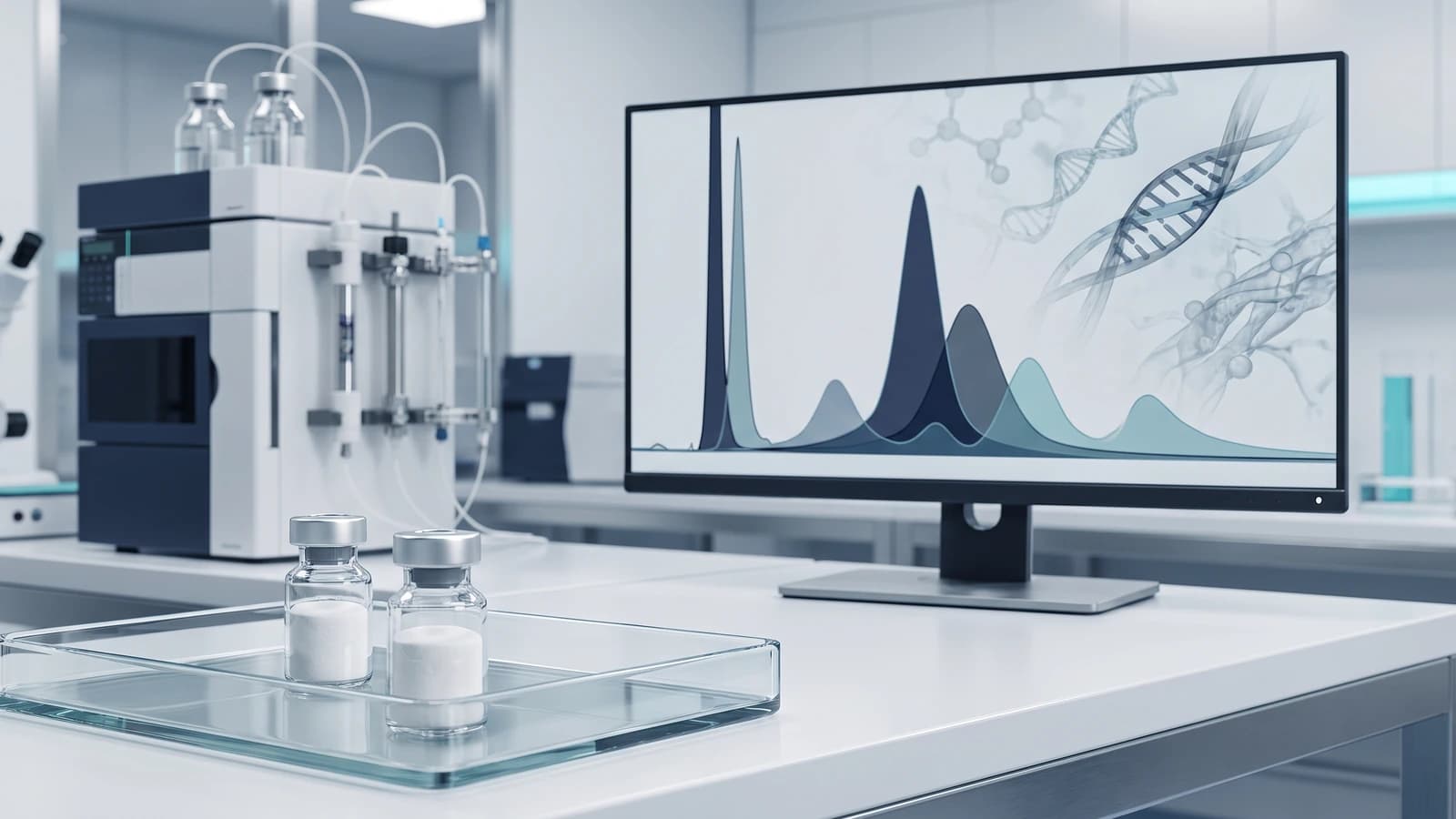
Securing a verified supply of GHK-Cu requires a rigorous, multi-modal analytical quality audit. Visual inspection of the blue lyophilized cake is insufficient; procurement managers must demand raw analytical data to detect fraudulent or sub-par batches. The audit must encompass Reverse-Phase High-Performance Liquid Chromatography (RP-HPLC), Electrospray Ionization Mass Spectrometry (ESI-MS), residual salt analysis, and endotoxin quantification to guarantee a verified ≥99% purity threshold.
RP-HPLC integration must demonstrate a symmetric single-peak shape with a tailing factor strictly between 0.95 and 1.20. This metric rules out baseline cutoff fraud and confirms the absence of unchelated peptide fragments. Concurrently, ESI-MS verification must confirm the compound-specific calculated molecular mass of approximately 404.84 g/mol, the correct charge-state envelope, expected isotope patterns, and the absolute absence of anomalous degradation fragments.
Residual salt analysis is equally critical. Testing must verify the complete exchange of cytotoxic Trifluoroacetate (TFA) for biocompatible acetate, ensuring the active pharmaceutical ingredient will not induce localized cellular toxicity upon application. Furthermore, quantitative chromogenic Limulus Amebocyte Lysate (LAL) assays must confirm endotoxin limits remain strictly below 0.5 EU/mg prior to batch release for clinical compounding.
The analytical protocol must also include HPLC-UV detection of GHK-Cu chelation integrity with a relative standard deviation (RSD) of less than 1.5%. ICP-MS verification of copper ion concentration and the absence of heavy metal contaminants is mandatory, alongside retention sample re-testing at 30 and 90 days to confirm pH stability. These specific parameters ensure that the coordinate covalent bond remains intact over time and that the batch is free from toxic heavy metal catalysts used during crude synthesis.
Procurement decisions must be anchored in this empirical data. Batch-to-batch reproducibility, characterized by an RSD under 1.5% and mandatory retention sample re-testing, serves as a non-negotiable clause in any supplier quality agreement. If a supplier cannot produce unredacted chromatograms demonstrating these specific tailing factors, RSD limits, and a verified ≥99% HPLC/MS purity threshold, the batch must be assumed to be a physical mixture of cheap copper salts and degraded peptide.
Batch Acceptance Fingerprints require HPLC-UV detection of GHK-Cu chelation integrity, ICP-MS verification of copper ion concentration, and mandatory retention sample re-testing at 30 and 90 days to confirm pH stability.
Batch Acceptance Fingerprints:
- HPLC-UV detection of GHK-Cu chelation integrity with RSD < 1.5%.
- ICP-MS verification of copper ion concentration and absence of heavy metal contaminants.
- Mandatory retention sample re-testing at 30 and 90 days to confirm pH stability.
Key Procurement Takeaway: Quality control audits must reject any batch failing to demonstrate a verified ≥99% purity threshold, an RSD < 1.5%, or where endotoxin levels exceed the strict 0.5 EU/mg safety limit.
Choose the right sourcing path
Factory-direct access for trial validation and commercial scale, backed by batch documentation and DDP delivery.
Resellers / Individuals
Low MOQ Factory-Direct Trial
Order 10+ Vials at Factory Pricing, Ready-to-Ship Inventory
Start a Trial OrderClinics / Bulk Buyers
Tier-1 Commercial Wholesale & Private Label
Full Batch COA, Custom Lyophilization, DDP Air Freight
Request Commercial QuoteFrequently asked questions
How does LeewayGo ensure the integrity of GHK-Cu during international shipping?
LeewayGo utilizes guaranteed door-to-door DDP (Delivered Duty Paid) air freight, managing all customs clearance and logistics to prevent delays that could expose the peptide to extreme temperature fluctuations, thereby preserving the Class-A cleanroom lyophilized stability.
Can I test a small batch of GHK-Cu before committing to a bulk wholesale order?
Yes, LeewayGo offers a low Minimum Order Quantity (MOQ) of just 10 vials, allowing compounding clinics and medspas to perform independent HPLC and MS validation testing on the factory-direct supply before scaling up.
Why is factory-direct supply critical for avoiding grey-market GHK-Cu?
Factory-direct supply eliminates middleman brokers who often substitute genuine chelated GHK-Cu with cheap, unchelated physical mixtures of GHK and copper sulfate. Direct sourcing ensures you receive Tier-1 pricing ($12–$18/vial) with verifiable analytical data.
What analytical proof is provided to confirm the peptide is fully chelated?
Every batch is verified using RP-HPLC and ESI-MS to confirm the exact molecular weight of the chelated complex (~404 g/mol) and to ensure batch-to-batch reproducibility with an RSD < 1.5%, guaranteeing you are not receiving a fraudulent physical mixture.