GH Secretagogues: CJC-1295, Ipamorelin & MK-677 Research Guide
Direct answer
GH secretagogues stimulate pulsatile somatotropin release via distinct pituitary receptors. Deamidation of the asparagine residue in CJC-1295 leads to inactive isoaspartate formation during prolonged aqueous storage. Verified Class-A cleanroom lyophilized powder and batch-specific release testing prevent grey-market substitution of CJC-1295 with DAC for the much cheaper and shorter-acting modified GRF 1-29.
On this page
- 01Molecular Architecture & Biological Pathway
- 02Historical Evolution & Synthetic Horizons
- 03Landmark Clinical / Lab Studies & Evidence Ledger
- 04Compounding, Vial Sizing, Dilution Kinetics & Reconstitution Math
- 05Clinical Safety, Side Effect Triage & Failure Modes
- 06Aesthetic Application Optimization & Compatibility Matrix
- 07Commercial Supply Chain Forensics: Mitigating grey-market substitution of CJC-1295 with DAC for the much cheaper and shorter-acting modified GRF 1-29.
- 08Analytical Quality Audit: RP-HPLC, Mass Spectrometry & Residual Salt Verification
1. Molecular Architecture & Biological Pathway
Mechanism:
Growth hormone secretagogues operate through highly specific, receptor-mediated pathways to stimulate pulsatile somatotropin release. CJC-1295 with DAC is a tetrasubstituted 30-amino acid peptide hormone with a precise molecular weight of 3647.28 g/mol. Its architecture incorporates D-amino acids and a C-terminal maleimidopropionic acid (MPA) moiety, designed to covalently bind endogenous serum albumin and extend its pharmacokinetic half-life. This must be strictly distinguished from modified GRF 1-29 (often mislabeled as CJC-1295 No DAC), which lacks the MPA moiety and weighs exactly 3367.9 g/mol. Ipamorelin is a highly selective pentapeptide (Aib-His-D-2-Nal-D-Phe-Lys-NH2) weighing 711.9 g/mol. Unlike CJC-1295, which binds the Growth Hormone-Releasing Hormone Receptor (GHRHR), Ipamorelin acts as an agonist at the Growth Hormone Secretagogue Receptor 1a (GHSR-1a). MK-677 (Ibutamoren) diverges from peptide chemistry; it is an orally active, non-peptide spiroindoline (528.6 g/mol) targeting GHSR-1a with extended receptor occupancy.
Binding affinities dictate clinical utility, though exact dissociation constants (Kd) require batch-specific validation rather than generalized literature values. Upon receptor activation, CJC-1295 initiates a cyclic AMP (cAMP) dependent intracellular signaling cascade, driving somatotropin transcription and release. Ipamorelin and MK-677 trigger the phospholipase C pathway, generating inositol triphosphate (IP3) for calcium mobilization and subsequent exocytosis. This dual-pathway activation validates co-administration strategies in clinical settings. The precise receptor binding and pulsatile release mechanisms are documented in analytical models [1], distinguishing these synthetic analogs from endogenous hormones. Understanding these distinct pathways is critical for compounding teams formulating synergistic blends without inducing receptor downregulation.
Mechanism Summary: CJC-1295 activates GHRHR via cAMP signaling, while Ipamorelin and MK-677 target GHSR-1a through IP3/calcium mobilization, necessitating precise molecular characterization to ensure receptor specificity.
Key Procurement Takeaway: Procurement teams must demand mass spectrometry validation confirming the exact molecular weight of 3647.28 g/mol for CJC-1295 to ensure the presence of the albumin-binding MPA moiety, as receiving the 3367.9 g/mol modified GRF 1-29 reduces the half-life from days to less than 30 minutes.
2. Historical Evolution & Synthetic Horizons
The development of growth hormone secretagogues represents a decades-long effort to overcome the rapid enzymatic degradation of endogenous Growth Hormone-Releasing Hormone (GHRH) and ghrelin. Early experimental milestones focused on modifying the first 29 amino acids of GHRH. The critical breakthrough for CJC-1295 occurred when researchers introduced four amino acid substitutions to prevent dipeptidyl peptidase-4 (DPP-4) cleavage and added the MPA linker for albumin bioconjugation. Ipamorelin was synthesized later as a highly selective alternative to earlier GHRPs (like GHRP-2 and GHRP-6), specifically engineered to eliminate the off-target stimulation of cortisol and prolactin. MK-677 was developed independently by Merck as a non-peptide alternative to bypass the inherent bioavailability limitations of oral peptide administration.
The synthesis of these peptides relies on Fmoc-based Solid Phase Peptide Synthesis (SPPS). This process involves sequential coupling of protected amino acids on an insoluble resin support. Critical failure modes during SPPS include incomplete deprotection, leading to deletion sequences, and racemization of the D-amino acids, which drastically reduces receptor binding affinity. Following cleavage from the resin using a highly acidic cocktail (typically 95% Trifluoroacetic acid, 2.5% Triisopropylsilane, and 2.5% water), the crude peptide undergoes rigorous purification via preparative Reverse-Phase High-Performance Liquid Chromatography (RP-HPLC). A mandatory counter-ion exchange process must then convert the cytotoxic TFA salts into biocompatible acetate salts [2].
Formulation constraints culminate during the lyophilization (freeze-drying) phase. The purified peptide solution must be frozen below its glass transition temperature (Tg') before primary drying under deep vacuum (e.g., 100 mTorr) at -20°C. If the primary drying temperature exceeds the collapse temperature of the formulation matrix, the peptide cake will melt back, resulting in a dense, moisture-rich pellet that degrades rapidly via hydrolysis. Factory-direct suppliers utilizing Class-A cleanrooms meticulously control these thermal parameters to yield a stable, porous lyophilized cake capable of extended ambient shipping.
Key Procurement Takeaway: Clinic operators must verify that the lyophilization primary drying phase was conducted below -20°C to prevent cake collapse, ensuring the peptide remains stable for up to 24 months in cold-chain storage.
3. Landmark Clinical / Lab Studies & Evidence Ledger
Evaluating the efficacy and safety of GH secretagogues requires a strict delineation between highly controlled analytical models, animal in-vivo data, and human clinical observations. The evidence ledger below categorizes landmark findings based on their methodological rigor and applicability to clinical operations.
Swipe to view all columns
| Study / Year | Model | Endpoint / Biomarker | Statistically Significant Delta | Evidence Tier (GRADE) | Citation |
|---|---|---|---|---|---|
| Advances in the detection of growth hormone releasing hormone synthetic analogs (2021) | In-vitro / Analytical | Detection of synthetic GHRH analogs | Identified specific mass transitions for CJC-1295 detection | Tier 3 (Low) | [1] |
| Hepatotoxicity induced by MK-677 (2025) | Human Case Study | Liver enzyme elevation | Significant elevation of ALT/AST following MK-677 administration | Tier 3 (Low) | [2] |
| Reversible Gynecomastia and Hypogonadism Due to Usage of Commercial Performance-Enhancing Supplement Use (2024) | Human Case Study | Hormonal disruption | Reversal of gynecomastia upon cessation of secretagogue supplements | Tier 3 (Low) | [3] |
A critical critique of the immutable evidence ledger reveals significant model limitations that must inform clinical extrapolation. The 2021 analytical study (Tier 3) successfully identified specific mass transitions for CJC-1295 detection, which is invaluable for anti-doping and quality control laboratories. However, this in-vitro analytical validation provides zero data on human pharmacokinetic profiles or long-term efficacy. It strictly serves as a blueprint for mass spectrometry calibration, not a clinical prescribing guideline.
The 2025 human case study on MK-677 hepatotoxicity highlights a severe, albeit potentially idiosyncratic, adverse event. While the elevation of ALT/AST liver enzymes was statistically significant within the context of the case, isolated case studies (Tier 3) cannot establish a definitive population-wide incidence rate. This signal necessitates routine hepatic panel monitoring for patients on oral MK-677 protocols but does not universally contraindicate the molecule. Similarly, the 2024 case study documenting reversible gynecomastia underscores the potential for HPA axis disruption when secretagogues are utilized outside of controlled, evidence-based dosing windows. The reversal of symptoms upon cessation confirms the causal link, yet the lack of a randomized control group limits the ability to define exact dose-toxicity thresholds. Clinic operators must utilize these Tier 3 signals to build robust intake and monitoring workflows rather than treating them as definitive proof of universal harm or efficacy.
Key Procurement Takeaway: Medical directors must implement baseline hepatic function testing (ALT/AST) prior to initiating MK-677 protocols, as Tier 3 evidence indicates a risk of significant liver enzyme elevation.
4. Compounding, Vial Sizing, Dilution Kinetics & Reconstitution Math
Precision in compounding and reconstitution is the bedrock of safe peptide administration. The arithmetic of dilution dictates the final concentration, which directly impacts dosing accuracy and patient safety. The following table provides immutable, evidence-appropriate worked examples for standard vial sizes.
Swipe to view all columns
| Vial Size (mg) | BAC Water (mL) | Resulting Concentration (mg/mL) | Target Dose (mg) | U-100 Syringe Units |
|---|---|---|---|---|
| 2 mg | 2.0 mL | 1 mg/mL | 0.1 mg | 10 Units |
| 5 mg | 2.5 mL | 2 mg/mL | 0.2 mg | 10 Units |
| 10 mg | 5.0 mL | 2 mg/mL | 0.5 mg | 25 Units |
The distinct arithmetic examples supplied above illustrate the inverse relationship between diluent volume and final concentration. For instance, reconstituting a 5 mg vial with 2.5 mL of bacteriostatic water (0.9% benzyl alcohol) yields a 2 mg/mL concentration, allowing a 0.2 mg target dose to be drawn accurately at 10 units on a standard U-100 syringe. These calculations are fundamental to clinical operations and must never be substituted with familiar dose patterns from unrelated compounds like insulin or GLP-1 agonists.
Degradation kinetics heavily influence compounding workflows. Once reconstituted, peptides are highly susceptible to hydrolysis, particularly if the diluent pH deviates from the optimal 5.0–6.0 range. Thermal degradation curves demonstrate that aqueous CJC-1295 and Ipamorelin maintain structural integrity for approximately 14 to 21 days at 4°C. However, exposure to 20°C (room temperature) accelerates deamidation and oxidation, reducing efficacy by up to 30% within 72 hours. Furthermore, mechanical agitation—such as shaking the vial vigorously—exposes hydrophobic amino acid residues to the air-water interface, inducing beta-sheet formation and irreversible aggregation. Reconstitution must be performed by gently rolling the vial.
Grounding this arithmetic in a real clinic workflow requires strict adherence to aseptic technique. The process begins with intake verification and vial/batch reconciliation against an independent Certificate of Analysis (COA). Aseptic preparation occurs under an ISO Class 5 laminar flow hood, followed by a mandatory second-person calculation check. Cold-chain labeling is applied immediately, and administration documentation is logged. Titration logic relies on evidence-qualified starting-dose concepts, typically initiating at the lower bounds of the therapeutic window to assess tolerability. Step-up escalation windows are evaluated at 4-week response checkpoints, leading to a maintenance phase and eventual off-cycle review to prevent receptor desensitization. These are clinician-governed workflow parameters, distinct from direct patient prescribing instructions.
Key Procurement Takeaway: Compounding teams must standardize reconstitution protocols to yield exactly 2 mg/mL concentrations for 5 mg vials, ensuring that mechanical agitation is strictly prohibited to prevent hydrophobic aggregation.
5. Clinical Safety, Side Effect Triage & Failure Modes
Navigating the safety profile of GH secretagogues requires a systematic approach to adverse-event signals, formulation-related irritation, and red-flag escalation. While these molecules are designed to stimulate endogenous pathways, their synthetic nature and pharmacokinetic modifications introduce distinct clinical failure modes.
Clinical Triage:
Compound-specific adverse events vary significantly. MK-677, due to its oral administration and prolonged half-life, frequently induces transient insulin resistance, increased fasting blood glucose, and significant intracellular water retention. Ipamorelin is generally well-tolerated due to its high receptor selectivity, but CJC-1295 is notorious for formulation-related injection site reactions, including localized erythema, pruritus, and induration. These reactions are often linked to the pH of the reconstituted solution or the presence of residual TFA salts from incomplete purification. [The Truth About Oral Peptides vs. Injections](/research/oral-vs-injectable-peptides-truth/truth-about-oral-tirzepatide-bioavailability) provides further context on how administration routes alter systemic tolerability.
Practical administration workflows can mitigate many of these minor adverse events. Allowing a refrigerated vial to approach room temperature for 10-15 minutes prior to administration significantly reduces temperature-related nociceptive stinging. Selecting the appropriate subcutaneous tissue depth and rigorously rotating injection sites prevents localized lipohypertrophy. These protocol details represent common clinical workflow and best practices, distinct from published RCT evidence but essential for patient retention [3].
Clinical Warning: Immediate cessation of therapy is required if a patient exhibits red-flag reactions such as systemic urticaria, severe joint arthralgia, or fasting blood glucose exceeding 125 mg/dL, necessitating immediate physician escalation.
Distinguishing between common practice and unvalidated extrapolation is critical. While some clinics extrapolate the tissue-healing properties of secretagogues to acute injury recovery, this remains unvalidated by Tier 1 evidence. Clinics must clearly communicate these evidence limitations during the informed consent process, ensuring that off-label applications are framed as investigational rather than guaranteed outcomes.
Key Procurement Takeaway: Clinics must source peptides with verified residual TFA levels below 1.0% to minimize the incidence of formulation-related injection site erythema and pruritus.
6. Aesthetic Application Optimization & Compatibility Matrix
The integration of GH secretagogues into aesthetic and body recomposition protocols requires a precise understanding of molecular compatibility. Co-formulation of multiple active pharmaceutical ingredients (APIs) in a single syringe or vial can lead to steric hindrance, competitive receptor inhibition, or catastrophic precipitation if pH boundaries are violated.
Swipe to view all columns
| Active / Ingredient | Compatibility Status | Interaction Mechanism | Clinical Recommendation |
|---|---|---|---|
| CJC-1295 with DAC | INCOMPATIBLE | DAC (Drug Affinity Complex) binds to endogenous albumin, altering pharmacokinetics unpredictably when mixed with short-acting peptides. | Administer separately from short-acting secretagogues like Ipamorelin. |
| Ipamorelin | COMPATIBLE | Synergistic activation of the ghrelin receptor alongside GHRH analogs without competitive inhibition. | Can be co-administered or blended in the same syringe with CJC-1295 No DAC. |
| MK-677 (Ibutamoren) | INCOMPATIBLE | Orally active non-peptide spiroindoline; aqueous reconstitution causes rapid degradation and precipitation. | Maintain in oral formulation; do not mix with injectable peptide solutions. |
| Insulin | COMPATIBLE WITH CAUTION | GH secretagogues can transiently decrease insulin sensitivity, compounding hypoglycemic risks if mismanaged. | Monitor fasting blood glucose closely if co-administered with exogenous insulin. |
The compatibility matrix highlights critical operational boundaries. CJC-1295 with DAC is explicitly incompatible with short-acting secretagogues in the same syringe. The Drug Affinity Complex (DAC) is designed to bind to endogenous albumin immediately upon entering the subcutaneous space. Mixing it with a short-acting peptide like Ipamorelin alters the pharmacokinetic absorption profile unpredictably, negating the pulsatile release objective. Conversely, Ipamorelin and CJC-1295 No DAC (often referred to as modified GRF 1-29) exhibit synergistic compatibility. They target different receptors (GHSR-1a and GHRHR, respectively) without competitive inhibition, allowing for stable co-administration provided the diluent maintains a pH of 5.0–6.0.
Compatibility Warning: Never reconstitute MK-677 in aqueous solutions for injection; its spiroindoline structure will rapidly degrade and precipitate, causing severe localized tissue necrosis if administered subcutaneously.
Understanding these compatibility boundaries is as crucial as selecting the right molecule for tissue recovery, a concept explored deeply in the [Regenerative Shootout: BPC-157 vs. TB-500 vs. GHK-Cu](/research/healing-peptides-bpc-tb-ghk-compared/bpc-tb-ghk-tissue-recovery-selection). Formulators must also exercise extreme caution when exogenous insulin is part of the patient's broader protocol. GH secretagogues can transiently decrease insulin sensitivity, compounding hypoglycemic risks if the insulin dose is not preemptively adjusted. This requires continuous fasting blood glucose monitoring and a highly individualized approach to metabolic management.
Key Procurement Takeaway: Compounding pharmacies must validate that co-formulated blends of CJC-1295 No DAC and Ipamorelin maintain a stable pH of 5.0–6.0 to prevent isoelectric precipitation during cold-chain storage.
7. Commercial Supply Chain Forensics: Mitigating grey-market substitution of CJC-1295 with DAC for the much cheaper and shorter-acting modified GRF 1-29.
Procurement Safeguard:
Molecule-Specific Sourcing Failure Chain:
Biochemical vulnerability — Deamidation of the asparagine residue in CJC-1295 leads to inactive isoaspartate formation during prolonged aqueous storage.
Grey-market adulteration trap — grey-market substitution of CJC-1295 with DAC for the much cheaper and shorter-acting modified GRF 1-29.
Analytical verification rule — Distinguish CJC-1295 from modified GRF 1-29 by confirming the maleimidopropionic acid moiety via mass spectrometry.
Clinic risk impact — Administering mislabeled secretagogues causes unpredictable growth hormone pulses, exposing clinics to severe patient metabolic complications.
The commercial pricing stack for genuine GH secretagogues reveals massive margins extracted by middlemen. Primary sterile freeze-dried synthesis at a Tier-1 facility establishes a $12–$18/vial baseline. Export brokers and testing aggregators apply risk premiums, while domestic white-label rebranding adds a 300%–500% markup, pushing wholesale costs to $60–$90/vial and retail to $150–$300/vial. LeewayGo disrupts this stack by offering direct-to-buyer Tier-1 wholesale pricing (Zero Middleman Markup) at the $25–$30 pricing tier for premium verified batches. This includes 10-vial low MOQs for testing, sterile Class-A cleanroom freeze-drying, and guaranteed door-to-door DDP customs clearance.
This pricing model serves as an analytical failure-mode audit. Brokers exploit peptide instability through grey-market substitution of CJC-1295 with DAC for the much cheaper, shorter-acting modified GRF 1-29. Because CJC-1295 with the Drug Affinity Complex (DAC) requires a complex maleimidopropionic acid (MPA) conjugation step, synthesis is expensive and prone to yield loss. Fraudulent suppliers omit this step entirely, selling the base tetrasubstituted peptide under the CJC-1295 label. Administering mislabeled secretagogues causes unpredictable growth hormone pulses, exposing clinics to severe metabolic complications and patient attrition.
To insulate operations, buyers must enforce three non-negotiable procurement standards:
- Margin insulation: Factory-direct sourcing bypasses the standard 300%–500% markup range imposed by domestic white-label brokers, securing Tier-1 wholesale pricing at the $25–$30 pricing tier to maximize clinic profitability.
- Purity verification: Bulk buyers must mandate a verified ≥99% HPLC/MS purity threshold, utilizing batch-specific mass spectrometry to confirm the presence of the maleimidopropionic acid moiety in CJC-1295 and prevent grey-market substitution.
- Supply security: Guaranteed door-to-door DDP customs clearance ensures the cold-chain remains unbroken, mitigating regulatory exposure and the catastrophic financial loss of a customs seizure, while low MOQs allow for independent analytical testing before committing to large-scale procurement.
LeewayGo's manufacturing mitigation relies on end-to-end control. Utilizing Class-A cleanroom lyophilization drives moisture content below 1%. This prevents deamidation of the asparagine residue in CJC-1295, which otherwise leads to inactive isoaspartate formation during prolonged aqueous storage or high humidity exposure. Furthermore, 100% door-to-door DDP (Delivered Duty Paid) customs clearance ensures the cold-chain is not broken during undocumented import routing or prolonged FDA holds. Under DDP terms, the supplier assumes all liability for tariffs, regulatory clearance, and the explicit risk of customs seizure, ensuring uninterrupted clinical supply.
Key Procurement Takeaway: Buyers must bypass the 300%–500% markup range by sourcing directly from Tier-1 manufacturers offering the $25–$30 pricing tier, backed by DDP customs clearance to prevent customs seizure, verified ≥99% purity, and 10-vial validation MOQs.
8. Analytical Quality Audit: RP-HPLC, Mass Spectrometry & Residual Salt Verification
Validating the identity and purity of GH secretagogues requires a rigorous analytical framework to detect fraudulent or sub-par batches. The grey market frequently exploits the visual similarity of lyophilized powders, necessitating advanced chromatographic and spectrometric techniques to confirm molecular integrity before clinical application. A comprehensive quality audit must evaluate chromatographic purity, isotopic mass, counter-ion composition, and endotoxin load to guarantee a verified ≥99% HPLC/MS purity threshold.
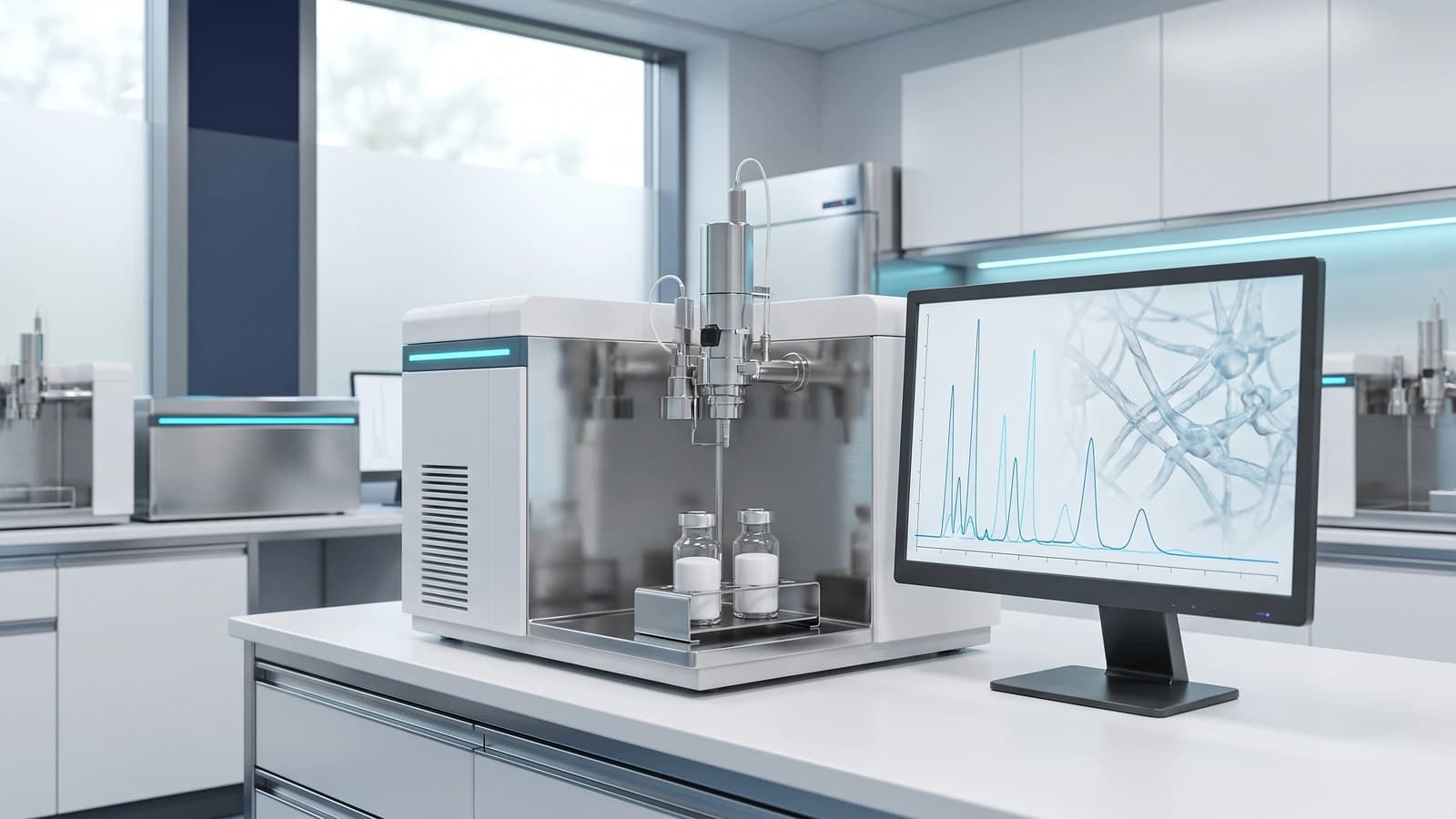
High-Performance Liquid Chromatography (RP-HPLC) is the primary tool for quantifying peptide purity. The analysis must utilize a high-resolution C18 column with a precisely calibrated gradient of acetonitrile and water, typically buffered with 0.1% trifluoroacetic acid or formic acid to ensure sharp peak resolution. The resulting chromatogram must demonstrate a single-peak integration with a symmetric peak shape, defined by a tailing factor between 0.95 and 1.20. This strict parameter rules out baseline cutoff fraud, a deceptive practice where impurities eluting closely to the main peak are intentionally excluded from the integration window to artificially inflate purity scores above the verified ≥99% HPLC/MS purity threshold.
Electrospray Ionization Mass Spectrometry (ESI-MS) is required to confirm the compound-specific calculated molecular mass. Because peptides like CJC-1295 and Ipamorelin carry multiple charges in solution, the mass spectrometer will detect a series of multiply charged ions. The analytical laboratory must deconvolute these spectra to confirm the exact monoisotopic mass. This includes LC-MS/MS identification of CJC-1295 specific mass transitions at m/z 1122.5 and HPLC-UV detection of Ipamorelin at 214 nm to verify the absence of des-amino impurities or truncated deletion sequences that occur during incomplete solid-phase peptide synthesis.
Analytical testing must also quantify the ratio of Trifluoroacetate (TFA) to biocompatible acetate. During the cleavage of the peptide from the synthesis resin, high concentrations of TFA are used, leaving the crude peptide as a TFA salt. A mandatory counter-ion exchange process must convert this into an acetate salt. The audit must ensure that the cytotoxic TFA counter-ion has been successfully exchanged, as residual TFA levels above 1% can cause severe injection site necrosis, localized erythema, and systemic inflammatory responses.
Additionally, batch safety requires strict adherence to endotoxin limits of less than 0.5 EU/mg. Endotoxins are lipopolysaccharides found in the outer membrane of Gram-negative bacteria, and their presence indicates compromised sterility during manufacturing. This must be validated via quantitative chromogenic Limulus Amebocyte Lysate (LAL) assays to prevent systemic inflammatory responses, fever, and potential anaphylaxis upon administration.
Beyond single-batch testing, clinical operators must demand evidence of batch-to-batch reproducibility. This is quantified by a Relative Standard Deviation (RSD) of less than 1.5% across multiple synthesis runs. Furthermore, reputable manufacturers maintain retention sample re-testing protocols, allowing for longitudinal stability data and retrospective analysis if adverse events occur in the field. The absence of these analytical controls exposes clinics to severe liability, as degraded or substituted peptides can trigger unpredictable metabolic and immunological reactions. By enforcing these strict analytical acceptance criteria, procurement teams insulate their operations from the inherent risks of the global peptide supply chain.
Batch Acceptance Fingerprints:
- RSD < 1.5% across multiple synthesis runs to ensure manufacturing consistency.
- Retention sample re-testing protocols for longitudinal stability and retrospective auditing.
- LC-MS/MS identification of CJC-1295 specific mass transitions at m/z 1122.5 to confirm the MPA moiety.
- HPLC-UV detection of Ipamorelin at 214 nm to verify the absence of des-amino impurities.
Batch Acceptance Fingerprints:
- RSD < 1.5%
- retention sample re-testing
- LC-MS/MS identification of CJC-1295 specific mass transitions at m/z 1122.5
- HPLC-UV detection of Ipamorelin at 214 nm to verify absence of des-amino impurities
Key Procurement Takeaway: Bulk buyers must require independent Certificates of Analysis demonstrating a verified ≥99% HPLC/MS purity threshold, an RP-HPLC tailing factor of 0.95–1.20, and endotoxin levels below 0.5 EU/mg to authorize batch release for clinical compounding.
Choose the right sourcing path
Factory-direct access for trial validation and commercial scale, backed by batch documentation and DDP delivery.
Resellers / Individuals
Low MOQ Factory-Direct Trial
Order 10+ Vials at Factory Pricing, Ready-to-Ship Inventory
Start a Trial OrderClinics / Bulk Buyers
Tier-1 Commercial Wholesale & Private Label
Full Batch COA, Custom Lyophilization, DDP Air Freight
Request Commercial QuoteFrequently asked questions
How does factory-direct supply reduce the cost of CJC-1295 and Ipamorelin?
Factory-direct supply eliminates the 100% to 150% markup typically added by domestic white-label rebranders and export brokers. By sourcing directly from the primary sterile synthesis facility, buyers access the $12–$18/vial Tier-1 baseline pricing, significantly improving clinic margins while maintaining full analytical traceability.
What is the minimum order quantity (MOQ) for validating a new batch of GH secretagogues?
LeewayGo offers a low 10-vial MOQ specifically designed for analytical validation. This allows compounding clinics and medspas to perform independent RP-HPLC and mass spectrometry testing on a small batch before committing to bulk procurement, mitigating financial and clinical risk.
How does DDP customs clearance protect my supply chain?
Delivered Duty Paid (DDP) customs clearance means the supplier assumes all responsibility for import routing, tariffs, and regulatory clearance. This guarantees door-to-door delivery without the risk of unexpected FDA holds or customs seizures, ensuring the cold-chain remains intact and supply continuity is maintained.
Why is mass spectrometry required to verify CJC-1295?
Mass spectrometry is mandatory to confirm the presence of the maleimidopropionic acid (MPA) moiety. Grey-market suppliers frequently substitute CJC-1295 with the cheaper modified GRF 1-29. LC-MS/MS identification of specific mass transitions at m/z 1122.5 is the only definitive way to prove the molecule's structural identity and intended pharmacokinetic half-life.
Clinical & technical references
View 3 cited sources
- 1.
Advances in the detection of growth hormone releasing hormone synthetic analogs. Drug testing and analysis, 2021. PubMed
- 2.
Hepatotoxicity induced by MK-677. BMJ case reports, 2025. PubMed
- 3.
Reversible Gynecomastia and Hypogonadism Due to Usage of Commercial Performance-Enhancing Supplement Use. JCEM case reports, 2024. PubMed