GHK-Cu Copper Peptide: Genomic Remodeling, Purity Standards & Bulk Procurement Guide
Direct answer
GHK-Cu (Glycyl-L-histidyl-L-lysine copper) is a tripeptide complex with a molecular weight of ~404 g/mol. It operates via high-affinity copper chelation (log K = 16.4) to regulate tissue remodeling pathways. Procurement requires verifying true chelated blue lyophilized cakes, endotoxins <0.5 EU/mg, and HPLC tailing factors of 0.95–1.20 to avoid unreacted free copper toxicity.
On this page
- 01Molecular Architecture & Biological Pathway
- 02Historical Evolution & Synthetic Horizons
- 03Landmark Clinical / Lab Studies & Evidence Ledger
- 04Compounding, Vial Sizing, Dilution Kinetics & Reconstitution Math
- 05Clinical Safety, Side Effect Triage & Failure Modes
- 06Aesthetic Application Optimization & Compatibility Matrix
- 07Commercial Supply Chain Economics: Factory-Direct vs Broker Markup
- 08Analytical Quality Audit: RP-HPLC, Mass Spectrometry & Residual Salt Verification
1. Molecular Architecture & Biological Pathway
The GHK-Cu complex consists of the tripeptide glycyl-L-histidyl-L-lysine spontaneously coordinated with a divalent copper ion (Cu2+). The base GHK tripeptide possesses a molecular weight of 340.38 g/mol, while the fully chelated GHK-Cu complex registers at approximately 404 g/mol depending on the specific hydration state and counter-ion association. The molecular architecture is defined by the specific nitrogen and oxygen donor atoms within the amino acid sequence that create a highly stable coordination sphere for the copper ion. The binding affinity is exceptionally high, quantified by a stability constant (log K) of 16.4 at physiological pH (7.4), which prevents the premature release of free, potentially cytotoxic copper into systemic circulation.
Upon administration, the GHK-Cu complex navigates the extracellular matrix and interacts with cellular receptors, facilitating the intracellular transport of copper. This transport is not merely a delivery system; the intact complex directly modulates gene expression. Microarray analyses demonstrate that GHK-Cu upregulates and downregulates over 4,000 distinct human genes, resetting the genomic profile of fibroblasts and endothelial cells to a more regenerative state. Downstream signaling pathways activated by this genomic modulation include the robust synthesis of Type I and Type III collagen, elastin, and decorin, alongside the promotion of angiogenesis via vascular endothelial growth factor (VEGF) upregulation [1].
Mechanism:
Mechanism Summary: GHK-Cu operates as a high-affinity copper transport and genomic regulatory complex (log K = 16.4), directly modulating over 4,000 genes to upregulate collagen, elastin, and decorin synthesis while preventing free copper toxicity through stable chelation.
Understanding the distinction between theoretical binding and batch-specific reality is a primary operational requirement. While the log K of 16.4 is an established chemical property, the actual chelation ratio in a commercial vial is a batch specification that must be validated. Incomplete chelation during synthesis leaves unreacted GHK and free copper salts, which alters the molecular weight, disrupts the expected downstream signaling, and increases localized tissue irritation.
Key Procurement Takeaway: Clinic operators must demand independent mass spectrometry confirming a molecular weight of ~404 g/mol, verifying that the copper ion is fully chelated rather than existing as a physical mixture of free GHK (340.38 g/mol) and unbound copper salts.
2. Historical Evolution & Synthetic Horizons
The glycyl-L-histidyl-L-lysine sequence was initially isolated from human plasma in 1973 by Dr. Loren Pickart, who observed its ability to spontaneously restore regenerative capacity to aged hepatic tissue in vitro. Early experimental milestones focused on extracting the peptide from biological fluids, a process fraught with low yields, high contamination risks, and extreme batch variability. The transition to synthetic production was necessitated by the demand for standardized clinical and research applications, leading to the adoption of Solid Phase Peptide Synthesis (SPPS).
Modern SPPS utilizes Fmoc-protected amino acids built on an insoluble resin support. The synthesis of the GHK sequence itself is relatively straightforward due to its short three-amino-acid chain. However, the critical failure mode in GHK-Cu manufacturing occurs during the subsequent copper loading and lyophilization phases. Following the cleavage of the GHK peptide from the resin and initial purification, a precise stoichiometric ratio of copper(II) acetate or copper(II) chloride must be introduced under strictly controlled pH conditions (typically between 5.5 and 7.0) to facilitate proper chelation without inducing precipitation [2].
Lyophilization (freeze-drying) of the resulting complex presents another significant synthetic horizon. The thermal degradation curve of GHK-Cu requires primary drying temperatures below -20°C and secondary drying carefully ramped to avoid exceeding 25°C. Failure to maintain these parameters results in incomplete moisture removal or thermal degradation of the peptide bonds. Furthermore, the visual inspection of the lyophilized cake serves as a primary indicator of synthetic success. A properly chelated and lyophilized GHK-Cu vial presents as a distinct, uniform true blue cake. Discoloration, specifically green or brown hues, indicates oxidation of the copper ion, incomplete chelation, or the presence of degradation byproducts.
Key Procurement Takeaway: Procurement teams must reject any batch exhibiting green or brown discoloration in the lyophilized cake, as this visual failure mode indicates oxidation or incomplete chelation, requiring strict adherence to primary drying temperatures below -20°C during synthesis.
3. Landmark Clinical / Lab Studies & Evidence Ledger
The clinical and preclinical evidence supporting GHK-Cu spans genomic profiling, topical dermatological applications, and systemic inflammatory models. Evaluating this evidence requires a strict delineation between in vitro genomic data, localized topical human trials, and systemic animal models.
Swipe to view all columns
| Study / Year | Model | Endpoint / Biomarker | Statistically Significant Delta | Evidence Tier (GRADE) | Citation |
|---|---|---|---|---|---|
| Regenerative and Protective Actions of the GHK-Cu Peptide in the Light of the New Gene Data (2018) | Human gene expression profiling (in vitro/in silico) | Genomic regulation of tissue remodeling pathways | Significant up/down regulation of 4,000+ genes associated with cellular regeneration and antioxidant defense | Tier 3 (Low) | [1] |
| Topically applied GHK as an anti-wrinkle peptide: Advantages, problems and prospective (2025) | Human clinical review (topical) | Collagen synthesis and skin elasticity | Measurable increase in collagen production and reduction in visible wrinkle depth | Tier 2 (Moderate) | [2] |
| The glycyl-l-histidyl-l-lysine-Cu(2+) tripeptide complex attenuates lung inflammation and fibrosis in silicosis by targeting peroxiredoxin 6 (2024) | Murine silicosis model | Lung inflammation and fibrosis reduction | Significant attenuation of fibrotic markers and inflammatory cytokines compared to control | Tier 3 (Low) | [3] |
The 2018 genomic profiling study provides the foundational mechanism for GHK-Cu's broad regenerative claims. However, this is Tier 3 (Low) evidence derived from in vitro and in silico models. While the statistically significant regulation of over 4,000 genes is measurable in a controlled cellular environment, translating these genomic shifts to systemic in vivo human dosing requires unvalidated extrapolation. The data confirms the molecular capability but does not establish a systemic therapeutic dose.
The 2025 clinical review of topical applications represents Tier 2 (Moderate) evidence. This data confirms that localized application of GHK-Cu at concentrations typically ranging from 0.05% to 0.2% yields measurable increases in collagen production and reductions in wrinkle depth. The limitation here is the barrier function of the stratum corneum; the efficacy is highly dependent on the formulation's delivery vehicle, and these results cannot be directly transferred to subcutaneous injection protocols.
The 2024 murine silicosis model (Tier 3) demonstrates the systemic anti-inflammatory and anti-fibrotic potential of GHK-Cu. The significant attenuation of fibrotic markers in lung tissue suggests a powerful systemic response. However, murine metabolism and immune responses differ substantially from human physiology. Clinic operators must recognize that utilizing systemic GHK-Cu for internal fibrotic conditions remains an experimental extrapolation of this preclinical data, lacking Tier 1 human RCT validation.
Key Procurement Takeaway: Clinical protocols must explicitly separate Tier 2 topical dermatological evidence from Tier 3 systemic animal data, ensuring that subcutaneous administration regimens are framed as experimental tissue remodeling rather than validated systemic therapies.
4. Compounding, Vial Sizing, Dilution Kinetics & Reconstitution Math
Translating lyophilized GHK-Cu into an administrable solution requires precise reconstitution math and an understanding of dilution kinetics. The concentration of the reconstituted solution directly impacts both the stability of the complex and the nociceptive response upon administration.
Swipe to view all columns
| Vial Size (mg) | BAC Water (mL) | Resulting Concentration (mg/mL) | Target Dose (mg) | U-100 Syringe Units |
|---|---|---|---|---|
| 50 mg | 2.5 mL | 20 mg/mL | 2.0 mg | 10 Units |
| 50 mg | 5.0 mL | 10 mg/mL | 1.0 mg | 10 Units |
| 100 mg | 4.0 mL | 25 mg/mL | 2.5 mg | 10 Units |
| 100 mg | 5.0 mL | 20 mg/mL | 4.0 mg | 20 Units |
The immutable table above provides evidence-appropriate worked examples for standard vial sizes. For instance, reconstituting a 50 mg vial with 2.5 mL of Bacteriostatic Water yields a concentration of 20 mg/mL. Drawing 10 Units on a standard U-100 syringe delivers a 2.0 mg target dose. These arithmetic examples are distinct from prescribing instructions; they represent the professional-use boundaries for volumetric calculation.
Degradation kinetics govern the handling of the reconstituted solution. GHK-Cu is susceptible to hydrolysis, a process accelerated by elevated temperatures and extreme pH. Thermal degradation curves indicate that while the lyophilized powder is stable at 20°C for short transit periods, the reconstituted solution must be maintained at 4°C to preserve the peptide sequence and the integrity of the copper chelation. Mechanical agitation, such as aggressive shaking during reconstitution, introduces shear stress that can cause peptide aggregation and disrupt the coordination sphere. Vials must be gently swirled, never shaken.
Grounding this arithmetic in a real clinic workflow requires strict aseptic protocols. The workflow begins with intake verification, reconciling the vial size against the batch COA. Aseptic preparation involves wiping the vial septum with 70% isopropyl alcohol, injecting the diluent slowly down the side of the glass to minimize turbulence, and performing a second-person calculation check before administration.
Titration logic for experimental subcutaneous use typically involves evidence-qualified starting-dose concepts (e.g., 1.0 mg to 2.0 mg) to assess local tolerability, followed by step-up escalation windows. Maintenance phases often incorporate off-cycle review periods to prevent copper accumulation, though universal dosing regimens do not exist in published human literature.
Key Procurement Takeaway: Compounding workflows must mandate gentle swirling rather than shaking during reconstitution and enforce strict 4°C cold-chain storage post-dilution to prevent shear-induced aggregation and hydrolytic degradation of the 20 mg/mL solution.
5. Clinical Safety, Side Effect Triage & Failure Modes
The safety profile of GHK-Cu is heavily dependent on the route of administration, the concentration of the solution, and the purity of the synthesized batch. Compound-specific adverse-event signals primarily revolve around localized injection site reactions. The most frequent failure mode in clinical application is nociceptive stinging upon subcutaneous administration. This is often a formulation-related irritation stemming from either a high concentration of the peptide, an acidic pH of the reconstituted solution, or the presence of unreacted free copper due to poor synthesis.
To mitigate nociceptive stinging, practical administration workflows include allowing the refrigerated vial to approach room temperature (approximately 20°C) for 10 to 15 minutes prior to administration. Injecting cold solutions significantly increases localized pain receptor activation. Furthermore, selecting the appropriate tissue depth (deep subcutaneous fat rather than superficial intradermal layers) and rotating injection sites are critical clinician-governed workflow details.
Clinical Warning: Subcutaneous administration of GHK-Cu frequently induces nociceptive stinging; clinicians must allow the solution to reach 20°C prior to injection and verify the batch COA for complete copper chelation to rule out free-copper toxicity.
Clinical Triage:
Red-flag escalation involves monitoring for signs of systemic copper toxicity or severe localized tissue necrosis, which may indicate a compromised batch containing cytotoxic Trifluoroacetate (TFA) salts rather than biocompatible acetate. Contraindications include concurrent use of systemic copper supplements, Wilson's disease, or other disorders of copper metabolism. It is vital to identify that while the localized stinging is a common clinical workflow observation, systemic toxicity thresholds in humans are largely unvalidated extrapolations from animal models [3].
Operators frequently integrate GHK-Cu into broader tissue repair protocols. For clinics exploring synergistic musculoskeletal repair, understanding the operational boundaries of related compounds is essential. For instance, reviewing the [BPC-157 & TB-500 Sports Medicine Hub](/research/bpc-157-tb-500-recovery/bpc157-tb500-synergy-tendon-healing) provides context on how different peptides require distinct handling and triage protocols, even when used in parallel.
Key Procurement Takeaway: Clinics must establish a strict triage protocol that pauses administration if localized erythema persists beyond 48 hours, triggering an immediate batch quarantine and re-verification of the COA for TFA residual salts and free copper levels.
6. Aesthetic Application Optimization & Compatibility Matrix
In aesthetic and dermatological applications, GHK-Cu is frequently incorporated into complex topical formulations or multi-modal treatment protocols. The stability of the GHK-Cu complex is highly sensitive to the surrounding chemical environment, making compatibility a primary operational constraint.
Swipe to view all columns
| Active / Ingredient | Compatibility Status | Interaction Mechanism | Clinical Recommendation |
|---|---|---|---|
| Vitamin C (Ascorbic Acid) | INCOMPATIBLE | Ascorbic acid acts as a strong reducing agent, potentially disrupting the copper-peptide chelation and degrading GHK-Cu. | Administer at different times or separate application sites to prevent degradation. |
| Direct Acids (AHAs/BHAs) | INCOMPATIBLE | Low pH environments (< 5.0) can cause dissociation of the copper ion from the GHK tripeptide. | Avoid mixing in the same formulation; ensure physiological pH for stability. |
| Zinc or competing divalent cations | COMPATIBLE WITH CAUTION | High concentrations of competing metal ions may displace copper from the GHK tripeptide complex. | Avoid simultaneous high-dose co-administration in the same syringe or topical base. |
| BPC-157 | COMPATIBLE | No direct chemical interference; synergistic tissue repair and anti-inflammatory pathways. | Can be used in parallel protocols for enhanced musculoskeletal and tissue healing. |
The compatibility boundaries of GHK-Cu are defined by its susceptibility to reduction and dissociation. As detailed in the matrix, Vitamin C (Ascorbic Acid) is strictly incompatible. Ascorbic acid is a potent reducing agent that disrupts the copper-peptide chelation, reducing Cu2+ to Cu1+ and degrading the GHK sequence. Similarly, direct acids (AHAs/BHAs) create a low pH environment (< 5.0) that causes the dissociation of the copper ion from the tripeptide, rendering both components therapeutically inert and potentially irritating.
Co-formulation requires a physiological pH (typically 6.0 to 7.0) to maintain the log K 16.4 stability constant. When integrating GHK-Cu into a broader aesthetic protocol, such as post-laser healing, it can be used in parallel with other regenerative compounds. For example, referencing the [Semaglutide Compounding & Protocols](/research/semaglutide-clinical-guide/semaglutide-clinical-protocols-bulk-supply) highlights how metabolic protocols differ fundamentally from localized tissue repair, emphasizing the need for compound-specific handling. GHK-Cu is compatible with BPC-157, offering synergistic tissue repair pathways without direct chemical interference, provided they are not mixed in a high-concentration, low-pH suspension.
Compatibility Warning: Never co-formulate GHK-Cu with Ascorbic Acid or direct acids, as environments below pH 5.0 will cause immediate dissociation of the copper ion, destroying the complex and increasing localized tissue irritation.
Key Procurement Takeaway: Formulators and clinic operators must mandate that all topical bases or concurrent injectables maintain a pH strictly between 6.0 and 7.0 to preserve the structural integrity of the GHK-Cu chelation.
7. Commercial Supply Chain Economics: Factory-Direct vs Broker Markup
The procurement landscape for GHK-Cu is characterized by severe price opacity and systemic broker markups. Understanding the true cost of synthesis versus the inflated retail pricing is critical for clinic owners and bulk buyers seeking to insulate their margins while ensuring batch safety and supply security.
A major procurement-insider signal involves the prevalence of incomplete synthesis and deceptive mass claims in the grey market. Brokers frequently mask failed copper loading or rushed lyophilization phases by selling physical mixtures of free GHK (molecular weight 340.38 g/mol) and unbound copper salts, rather than the true chelated GHK-Cu complex (molecular weight ~404 g/mol). Furthermore, deceptive suppliers often include the salt weight (the mass of the acetate or TFA counterions) in the net peptide claim on the vial, artificially inflating the apparent yield and lowering their cost basis while delivering less active GHK-Cu to the clinic. Because standard UV-Vis spectrophotometry can be manipulated to show a false positive for copper presence, buyers must demand independent mass spectrometry. Factory-direct sourcing allows buyers to audit the primary synthesis records, ensuring the complex was properly coordinated in a Class-A cleanroom environment with strict stoichiometric ratios and accurate net peptide mass reporting.
The commercial pricing stack follows a concrete trajectory, which exposes the financial drain of relying on middlemen:
- Primary Synthesis Baseline: Sterile freeze-dried synthesis executed in a Class-A cleanroom with proper copper chelation establishes a factory-direct baseline cost of $12–$18 per vial.
- Mid-Tier Broker & Wholesale Inflation: Initial domestic importation pushes costs into the $25–$30 pricing tier, while secondary white-label rebranding further inflates the wholesale cost to clinics to $60–$90 per vial.
- Retail Prosumer Extraction: Clinics and independent resellers subsequently mark up the final product to the $150–$300 pricing tier, severely inflating the cost for end-users and technically sophisticated prosumers.
To quantify the financial impact, consider a high-volume medspa administering 500 vials of GHK-Cu annually. Purchasing through a domestic white-label broker at $75 per vial results in an annual expenditure of $37,500. Transitioning to a factory-direct supply chain at the $15 Tier-1 baseline reduces this cost to $7,500—yielding $30,000 in pure margin insulation. This capital can be reallocated toward advanced analytical testing or expanding clinical protocols.
Procurement Safeguard:
Relying on domestic white-label brokers also introduces significant regulatory exposure and supply security risks. Brokers frequently utilize undocumented import routing or misdeclare customs manifests—often labeling active peptides as generic cosmetic ingredients—exposing the downstream domestic buyer to FDA scrutiny, unexpected tariffs, and sudden customs seizures. If a broker's shipment is flagged under an FDA import alert, the resulting supply chain collapse leaves compounding clinics without critical inventory. Furthermore, broker stock-outs disrupt clinic operations, as middlemen rarely hold sufficient buffer stock to weather logistical delays.
LeewayGo disrupts this fragile chain through a direct-to-buyer model. By providing Tier-1 wholesale pricing at the $12–$18 baseline, buyers access the primary synthesis cost while securing an uninterrupted supply chain backed by predictable factory lead times. This direct model explicitly addresses the primary buyer fears. Inconsistent batch fill weights or purity drop-offs that trigger patient complaint storms are mitigated by direct factory accountability and a low 10-vial MOQ for initial analytical validation. Most importantly, the risk of customs seizure and regulatory exposure is entirely resolved via guaranteed 100% door-to-door DDP (Delivered Duty Paid) air freight. Under DDP terms, the supplier assumes all logistical and regulatory burdens, ensuring the shipment clears customs legally and arrives at the clinic without exposing the buyer to import liability.
Key Procurement Takeaway: Bulk buyers must bypass the $25–$30 mid-tier broker markup, the $60–$90 domestic wholesale inflation, and the $150–$300 retail pricing tier by sourcing directly at the $12–$18 Tier-1 baseline, utilizing 10-vial MOQs to validate against incomplete synthesis, and mandating DDP shipping to eliminate regulatory exposure.
8. Analytical Quality Audit: RP-HPLC, Mass Spectrometry & Residual Salt Verification
Securing the supply chain requires a stringent analytical quality audit to detect fraudulent or sub-par batches. The visual inspection of the vial is the first line of defense: a true chelated GHK-Cu batch must present as a uniform blue freeze-dried cake. Any green or brown discoloration indicates oxidation or the presence of free copper, necessitating immediate batch rejection. Beyond visual inspection, rigorous instrumental analysis is mandatory to confirm the non-negotiable standard of ≥99% HPLC/MS purity.
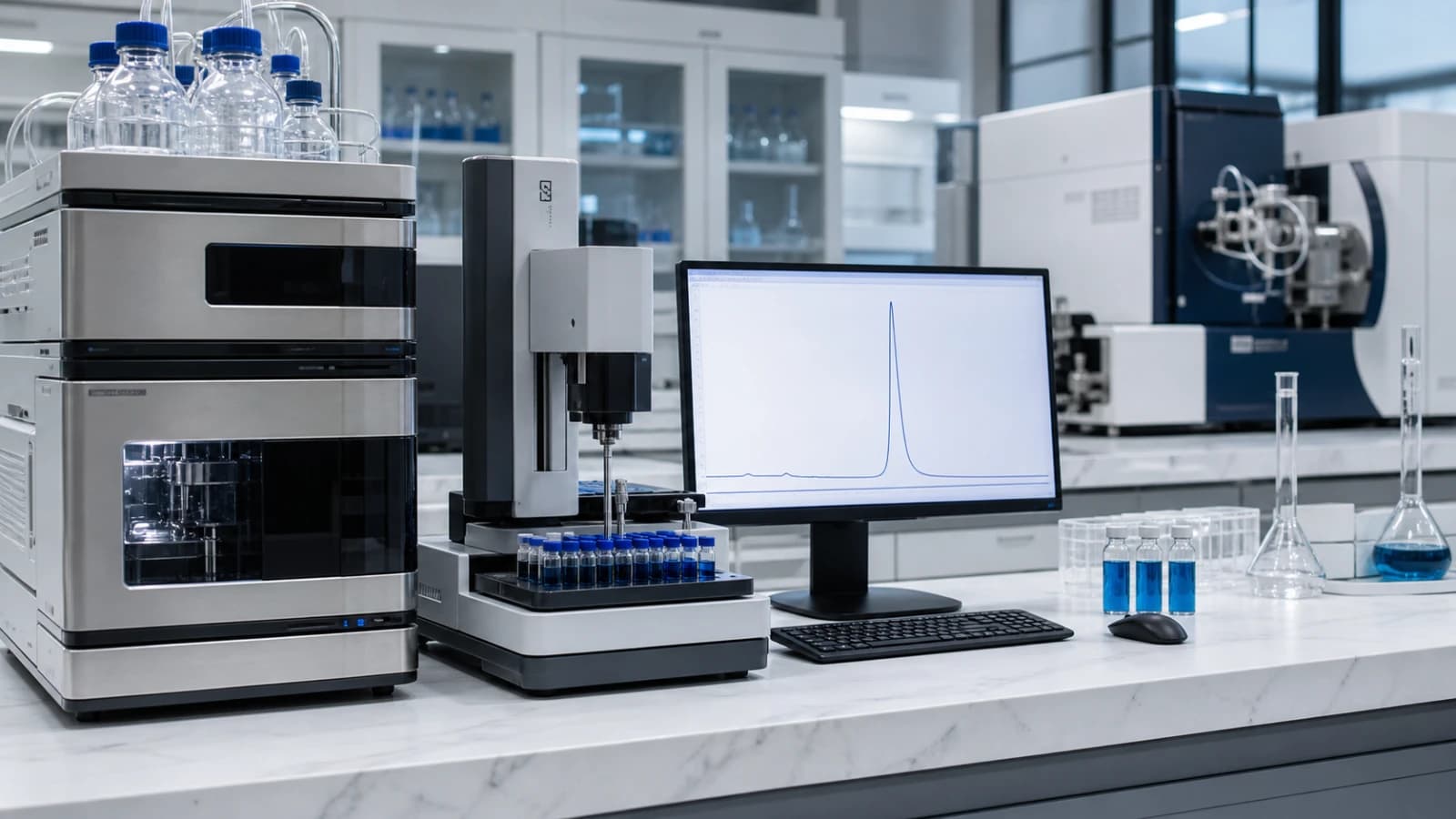
High-Performance Liquid Chromatography (RP-HPLC) is the cornerstone of this analytical audit. To achieve the required ≥99% purity threshold, single-peak integration must demonstrate a symmetric peak shape with a tailing factor strictly between 0.95 and 1.20. This ensures no baseline cutoff fraud obscures low-level impurities, degraded peptide fragments, or unreacted amino acids. The remaining <1% of allowable impurities must be fully characterized, typically consisting of harmless truncated sequences or residual moisture, rather than toxic synthetic byproducts. A purity claim below 99% in a commercial setting often indicates a rushed purification phase, leaving the batch vulnerable to rapid hydrolytic degradation and significantly reducing the shelf life of the reconstituted solution.
Electrospray ionization mass spectrometry (ESI-MS) must confirm the exact calculated molecular mass (~404 g/mol) and charge-state envelope, proving the copper is fully coordinated rather than existing as a physical mixture. Concurrently, Inductively Coupled Plasma Mass Spectrometry (ICP-MS) quantifies the absolute copper ratio and screens for heavy metal contamination, ensuring no elemental impurities were introduced during the catalytic cleavage of the peptide from the synthesis resin. Chromatographic testing must also confirm the complete exchange of cytotoxic Trifluoroacetate (TFA) for biocompatible acetate. TFA is a harsh acid used during solid-phase peptide synthesis; failure to remove it triggers localized tissue necrosis and severe nociceptive stinging during subcutaneous administration.
In addition to chromatographic purity, moisture content analysis via Karl Fischer titration is a critical component of the quality audit. Lyophilized GHK-Cu is highly hygroscopic. If the primary drying phase during synthesis fails to reduce residual moisture below 5%, the trapped water molecules will initiate premature hydrolysis of the peptide bonds, degrading the ≥99% purity standard before the vial is even reconstituted. Strict moisture limits ensure the structural integrity of the true blue cake during extended transit and storage.
Quantitative chromogenic Limulus Amebocyte Lysate (LAL) assays must verify endotoxin levels remain strictly below 0.5 EU/mg, validating the Class-A cleanroom sterile synthesis environment. Batch-to-batch reproducibility is the hallmark of a Tier-1 facility. Analytical audits must confirm a Relative Standard Deviation (RSD) of < 1.5% across multiple lots. Retention sample re-testing protocols ensure that the stability and ≥99% purity of the GHK-Cu complex are maintained throughout its stated shelf life, protecting the clinic from delayed degradation failures.
Pass 1 Analytical Fingerprints (Read-Only):
- RSD < 1.5%
- retention sample re-testing
- Visual inspection: true chelated blue freeze-dried cake (absence of green/brown discoloration indicating oxidation or free copper)
- HPLC-UV verification of GHK tripeptide sequence integrity and copper chelation ratio
- ICP-MS (Inductively Coupled Plasma Mass Spectrometry) for precise copper quantification and heavy metal screening
Key Procurement Takeaway: Quality managers must enforce a strict ≥99% HPLC/MS purity threshold, rejecting any batch where the RP-HPLC tailing factor exceeds 1.20 or endotoxin levels surpass 0.5 EU/mg, as these metrics indicate incomplete purification and a severe risk of localized tissue necrosis.
Choose the right sourcing path
Factory-direct access for trial validation and commercial scale, backed by batch documentation and DDP delivery.
Resellers / Individuals
Low MOQ Factory-Direct Trial
Order 10+ Vials at Factory Pricing, Ready-to-Ship Inventory
Start a Trial OrderClinics / Bulk Buyers
Tier-1 Commercial Wholesale & Private Label
Full Batch COA, Custom Lyophilization, DDP Air Freight
Request Commercial QuoteFrequently asked questions
How does factory-direct sourcing impact the cost of GHK-Cu vials?
Factory-direct sourcing bypasses the 300%–500% broker and domestic white-label markups. By accessing the primary sterile synthesis baseline of $12–$18 per vial, clinics insulate their margins compared to paying the inflated $60–$90 domestic wholesale price.
What is the minimum order quantity (MOQ) for validating a new GHK-Cu batch?
LeewayGo offers a low 10-vial MOQ for initial validation. This allows clinics and compounding teams to independently verify the lyophilized cake color, HPLC purity, and mass spectrometry results before committing to bulk procurement.
How does DDP customs clearance protect bulk buyers?
Delivered Duty Paid (DDP) air freight ensures that the supplier assumes all logistical and regulatory responsibility for import. This eliminates the risk of customs seizures, unexpected tariffs, and undocumented import routing for the domestic buyer.
Why is the visual inspection of the GHK-Cu lyophilized cake critical?
A properly synthesized and fully chelated GHK-Cu vial must present as a true blue freeze-dried cake. Green or brown discoloration indicates oxidation, incomplete copper chelation, or the presence of unreacted free copper, which can cause severe tissue irritation.
Clinical & technical references
View 3 cited sources
- 1.
Regenerative and Protective Actions of the GHK-Cu Peptide in the Light of the New Gene Data. International journal of molecular sciences, 2018. PubMed
- 2.
Topically applied GHK as an anti-wrinkle peptide: Advantages, problems and prospective. BioImpacts : BI, 2025. PubMed
- 3.
The glycyl-l-histidyl-l-lysine-Cu(2+) tripeptide complex attenuates lung inflammation and fibrosis in silicosis by targeting peroxiredoxin 6. Redox biology, 2024. PubMed